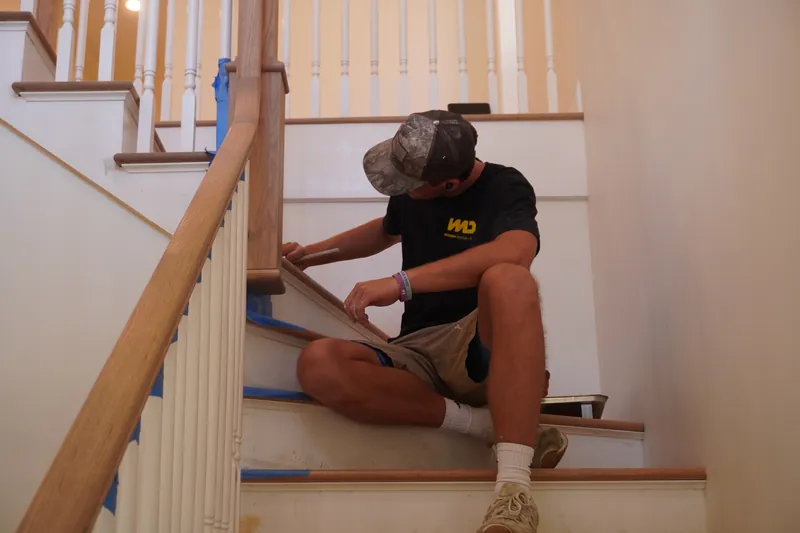
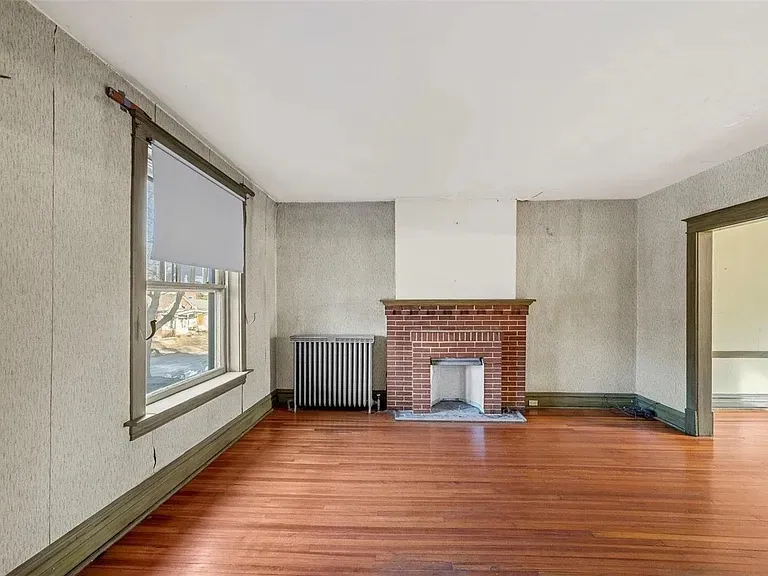
St. Louis is an old city, and its houses show it. In the City of St. Louis, 58 percent of homes were built before 1940, according to the Census Bureau's American Community Survey estimates for 2020 to 2024. The sale of lead-based paint for use in homes was banned in 1978, and the older a house is, the more likely it has some.
That is not a reason to panic or to put off a renovation. EPA says children can live safely in older homes as long as paint is in good condition and surfaces are kept clean. The risk comes when painted surfaces are sanded, scraped, cut or torn out, which is exactly what renovation does.
- In a home built before 1978, assume the paint contains lead until a certified inspector or risk assessor shows otherwise.
- The hazard is dust and chips. Children under six and pregnant women face the greatest risk.
- Paid work that disturbs paint in a pre-1978 home generally must be done by an EPA-certified firm using lead-safe practices.
- Small jobs (6 square feet or less per room inside, 20 outside) are exempt, but window replacement never is.
- The City of St. Louis and St. Louis County both offer free lead inspections to qualifying households.
Why lead paint matters in St. Louis
The City of St. Louis has about 174,000 homes, and about 101,000 of them were built in 1939 or earlier. Roughly 82 percent were built before 1970. St. Louis County's housing is newer, but more than half of its homes also predate 1970.
Nationally, HUD's American Healthy Homes Survey II, with data collected in 2019, estimated that 34.6 million homes, 29.4 percent of U.S. housing, have lead-based paint somewhere. Hazards were significantly more common in older housing (especially homes built before 1960), in single-family homes and in the Northeast and Midwest. Much of the St. Louis housing stock fits that description.
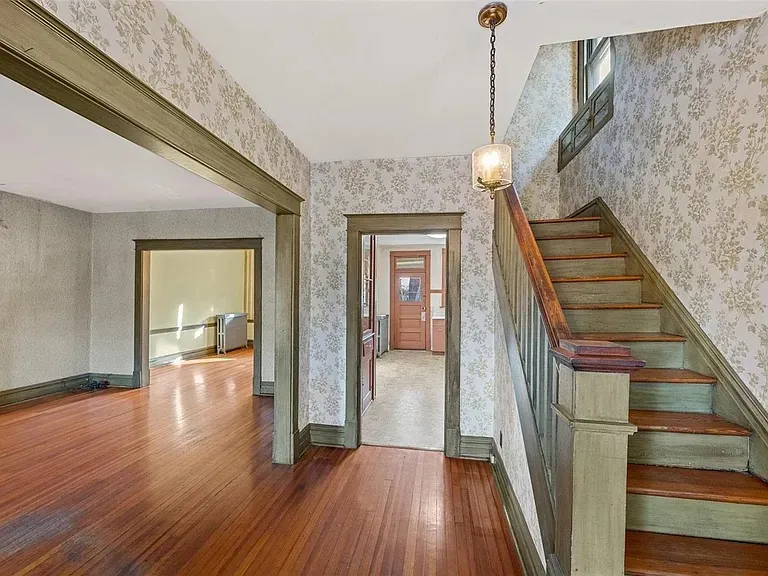
How common lead paint is, by the age of the house
By EPA's figures, 87 percent of homes built before 1940 have some lead-based paint, compared with 24 percent of homes built from 1960 to 1978. EPA's guidance gives no figure for the years in between.
A national survey from 1998 to 2000 measured something more practical: how many homes had a significant lead hazard, meaning deteriorated lead paint, lead-contaminated dust or contaminated soil. Hazards rose steeply with age and were more common in the Midwest (33 percent of homes) than in the South (17 percent) or the West (15 percent).
| When the home was built | Has some lead-based paint (EPA) | Had a significant lead hazard (1998 to 2000 survey) |
|---|---|---|
| Before 1940 | 87% | 68% |
| 1940 to 1959 | No EPA figure | 43% |
| 1960 to 1977 | 24% (EPA's range runs through 1978) | 8% |
Two more findings matter for renovation. Even in pre-1940 homes, most surfaces did not have lead-based paint, so testing the specific parts you plan to disturb can narrow the work. And windows and doors had the highest rates of lead paint in almost every age group. They are friction and impact surfaces that can shed lead dust and chips, and window work gets special treatment under the federal rules.
Why the dust is the danger, especially for children
According to the CDC, no safe blood lead level in children has been identified. Even low levels are associated with developmental delays, difficulty learning and behavioral problems, and the effects can be permanent. Most children have no obvious immediate symptoms, so if you are worried, ask your child's healthcare provider about a blood lead test.
Children younger than six are the most likely to be exposed, because many swallow lead dust by putting toys and other objects in their mouths. Lead can also pass to a baby during pregnancy. And a parent who works on older homes can carry lead dust home on clothes and skin, the CDC notes.
EPA lists scraping, drilling, cutting, opening walls, removing trim and demolition as work that creates dust that may contain lead. Keeping that dust inside the work area is the whole point of lead-safe practice.
What EPA's renovation rule requires
EPA's Renovation, Repair and Painting (RRP) rule, fully in effect since April 22, 2010, applies to anyone paid to do work that disturbs paint in homes, child care facilities and preschools built before 1978. That includes general contractors and trades such as painters, plumbers, carpenters and electricians, down to one-person businesses. Firms must be certified by EPA, and each job must have a certified renovator who has completed an accredited course. Missouri does not run its own RRP program, so EPA administers the rule here. (Missouri's Department of Health and Senior Services separately licenses lead inspectors, risk assessors and abatement contractors.)
On a typical job, the rule requires:
- The pamphlet. The firm gives you EPA's The Lead-Safe Certified Guide to Renovate Right no more than 60 days before work begins, and gets your written acknowledgment or mails it at least seven days ahead.
- Setup. Warning signs and a contained work area. Indoors, that means removing or covering furniture, closing and covering ducts, closing windows and doors, and taping plastic over the floor at least 6 feet beyond the work. Outdoors, doors and windows within 20 feet are closed and the ground is covered, normally 10 feet out.
- No banned methods. No open-flame burning or torching of paint, no power sanding, grinding, planing or blasting without a shroud and HEPA vacuum attachment, and no heat guns at 1,100 degrees Fahrenheit or hotter.
- Cleanup and verification. Waste is bagged, surfaces are HEPA vacuumed and wet wiped, and a certified renovator wipes windowsills, floors and countertops and compares the cloths to an EPA verification card, re-cleaning until they pass.
- Records. You get the firm's compliance records with the final invoice or within 30 days of completion, whichever is earlier. The firm keeps its records for three years.
The certified renovator must be on site while signs go up, while containment is set up and during cleaning, and reachable at all times while work is under way.
Small jobs, windows and other exceptions
The rule exempts minor repair and maintenance that disturbs 6 square feet or less of painted surface per room inside, or 20 square feet or less outside. Three limits keep that narrow:
- Jobs in the same room within 30 days count as one job.
- Removing a painted component, such as a door or a run of trim, counts the entire painted area removed.
- The exemption never covers window replacement, demolition of painted surfaces, or the banned methods above.
Work is also exempt when the components being disturbed are documented to be lead-free: by a certified inspector's or risk assessor's written determination, by a certified renovator using an EPA-recognized test kit, or by an EPA-recognized lab testing paint chips a certified renovator collected. Emergency repairs get some leeway but still require cleanup and cleaning verification.
The rule generally does not cover homeowners working on their own homes, except those who rent out all or part of the home, run a child care business there, or buy, renovate and sell houses for profit.
Testing: finding out what you have
EPA's simplest advice for a pre-1978 home is to assume the paint contains lead. If you want to know:
- Lead inspection. A certified inspector determines whether the home, or the part you are working on, has lead-based paint and where.
- Risk assessment. A certified risk assessor tells you whether there are current hazards from lead in paint, dust or soil, and what to do about them.
- Lab analysis. A lab in EPA's National Lead Laboratory Accreditation Program can analyze paint chip, dust or soil samples.
- Test kits. EPA recognizes three kits (LeadCheck, D-Lead and a State of Massachusetts kit), but only for use by certified renovators and only to show that regulated lead paint is not present. No kit has met EPA's separate standard for limiting false positives. For paint in your home, EPA recommends a certified inspector or risk assessor over store-bought kits.
In Missouri, inspectors and risk assessors are licensed by the Department of Health and Senior Services, which publishes searchable lists. EPA's National Lead Information Center, 1-800-424-5323, can also help.
Free inspections in the St. Louis area
- City of St. Louis. The Building Division's Lead Inspection and Hazard Control Division inspects residential properties free of charge where a child under six or a pregnant woman lives. Request one online or at (314) 622-4800. If hazards are found, owners may apply for financial help based on income, whether children under six live there and whether the owner lives in the home.
- St. Louis County. The Department of Public Health's Healthy Homes and Lead Poisoning Prevention Program offers free home inspections for lead-based paint hazards to county residents: (314) 615-5323.
Programs and funding change, so call to confirm before you plan around either one.
Questions to ask any contractor
For any project that will disturb paint in a pre-1978 home, ask:
- Is your firm EPA lead-safe certified? Ask for the certificate, and look the firm up in EPA's search for certified firms.
- Who is the certified renovator on my job, and when will they be on site?
- Will you test the surfaces you will disturb, or assume they contain lead? A certified renovator must use a recognized test kit if you ask.
- When will I receive the Renovate Right pamphlet?
- How will you contain the work and protect the rest of the house, including the ducts?
- What tools and methods will you use to remove paint?
- Who performs cleaning verification, and when do I get the records?
- Is lead-safe work included in the written scope and price?
Specific answers are a good sign; "we're always careful" is not an answer. Firms cannot even advertise RRP-covered work without EPA certification. Our guide to choosing a contractor in Missouri covers licensing, insurance and contracts.
If you do the work yourself
Homeowners working on their own homes are generally not bound by the RRP rule, but the dust does not know the difference. EPA recommends hiring a lead-safe certified contractor, and if you do the work anyway, following its do-it-yourself practices:
- Find out, or assume. Test the surfaces first, or assume they contain lead.
- Set up. Move furniture, rugs, curtains, food and clothing out. Cover the floor with plastic, close and seal doors, close windows, and turn off forced-air heating and cooling before taping plastic over the vents.
- Protect yourself. EPA suggests a disposable N-100 respirator, coveralls, shoe covers, eye protection and gloves. Wash your hands and face whenever you stop, wash work clothes separately and do not eat or drink in the work area.
- Keep dust down. Mist surfaces before scraping, sanding, drilling or cutting, use wet-dry sandpaper and use power tools only with HEPA vacuum attachments. Keep heat guns under 1,100 degrees Fahrenheit, and follow the instructions on chemical strippers.
- Clean daily and at the end. HEPA vacuum, wipe with wet disposable cloths and mop until no dust or debris remains, then bag and seal the waste.
Keep family members out of the work area until final cleanup, especially young children and anyone who is pregnant. Torching paint or power sanding without a HEPA shroud makes the same dust in a homeowner's hands as in a contractor's. For proof the room is clean, a certified dust sampling technician, inspector or risk assessor can test for lead dust afterward.
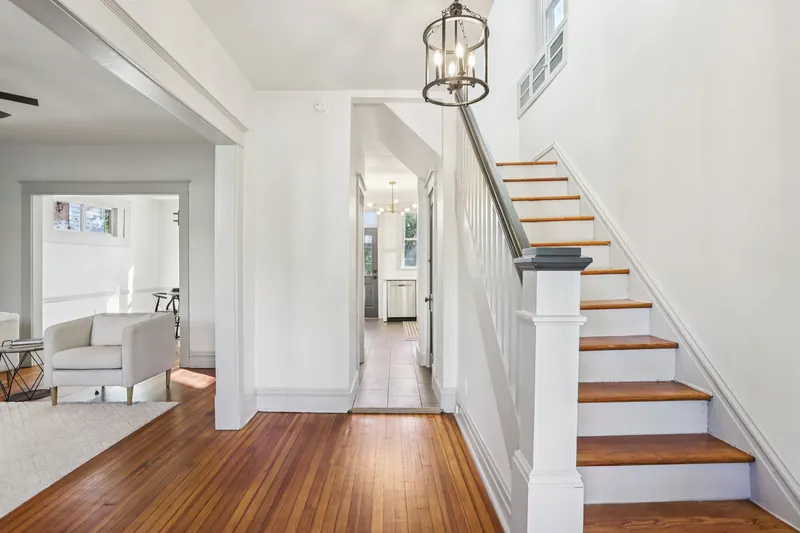
Planning work on an older home? Modern Design + Build's first consultation is free. Bring the year your house was built and any lead test results you have, because whoever you hire, that information belongs in the conversation before the scope and price are set. Get in touch.
- Year structure built (B25034), ACS 2020 to 2024, U.S. Census Bureau
- How can I tell if my home contains lead-based paint?, U.S. EPA
- Lead Renovation, Repair and Painting Program, U.S. EPA
- RRP program rules, U.S. EPA
- RRP program for contractors, U.S. EPA
- Lead-safe renovations for DIYers, U.S. EPA
- Lead test kits, U.S. EPA
- Renovate Right pamphlet, U.S. EPA
- 40 CFR 745.82, eCFR
- 40 CFR 745.83, eCFR
- 40 CFR 745.84, eCFR
- 40 CFR 745.85, eCFR
- 40 CFR 745.86, eCFR
- 40 CFR 745.89, eCFR
- 40 CFR 745.90, eCFR
- Lead findings from the American Healthy Homes Survey II, HUD (May 2021)
- Prevalence of lead-based paint hazards in U.S. housing, Environmental Health Perspectives (2002)
- About childhood lead poisoning prevention, CDC
- Lead exposure symptoms and complications, CDC
- People at increased risk for childhood lead poisoning, CDC
- Lead licensing, Missouri Department of Health and Senior Services
- Missouri licensed lead professionals, Missouri Department of Health and Senior Services
- Lead Inspection and Hazard Control Division, City of St. Louis
- Healthy Homes, St. Louis County Department of Public Health