A bathroom is usually the smallest room in a remodel and one of the most complicated. Nearly every trade works in it, and everything behind the tile has to stay watertight for decades.
That is why published bathroom costs vary so widely. This guide lays out the current figures, what each one includes, and the St. Louis factors that move the number. Every figure comes with its source and year.
- The 2025 Cost vs. Value report puts a midrange bathroom remodel at $26,138 nationally, an upscale one at $81,612 and a universal design remodel at $42,183. The latest St. Louis figure for a midrange bath, from 2024, is $24,817.
- Homeowner surveys run lower: Houzz's 2026 study found a $15,000 national median for primary bathroom projects, and Angi's 2026 St. Louis average is $11,246.
- Moving fixtures, the amount and type of tile, the shower and its glass, and what old walls and floors are hiding move the price most.
- Labor is 40% to 65% of a bathroom budget, according to Angi's 2026 guides, which is why small rooms are rarely cheap.
- Bathrooms recoup only part of their cost at sale: 80% for a midrange remodel nationally in 2025, and 57.6% in St. Louis in 2024.
The short answer
Published figures for a bathroom remodel run from $6,190, the low end of Angi's 2026 range for St. Louis, to $81,612 for the upscale bath remodel in the 2025 Cost vs. Value report. As with kitchens, the gap is scope.
Zonda's Cost vs. Value report, published by the Journal of Light Construction (JLC), defines three bathroom projects. Here is what the 2025 national figures buy:
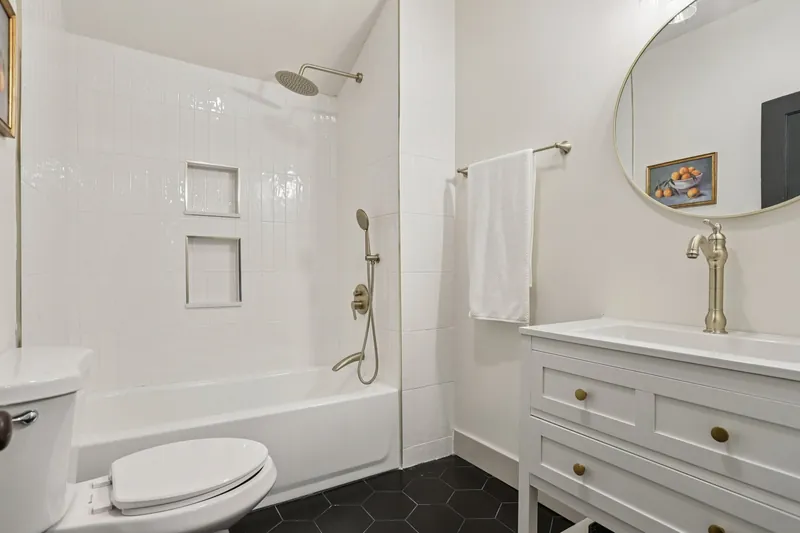
- Midrange: $26,138. Updates a 5 by 7 foot bathroom with a porcelain-on-steel tub and ceramic tile surround, a pressure-balanced shower valve, a standard toilet, a solid-surface vanity top, a recessed medicine cabinet, a ceramic tile floor and vinyl wallpaper.
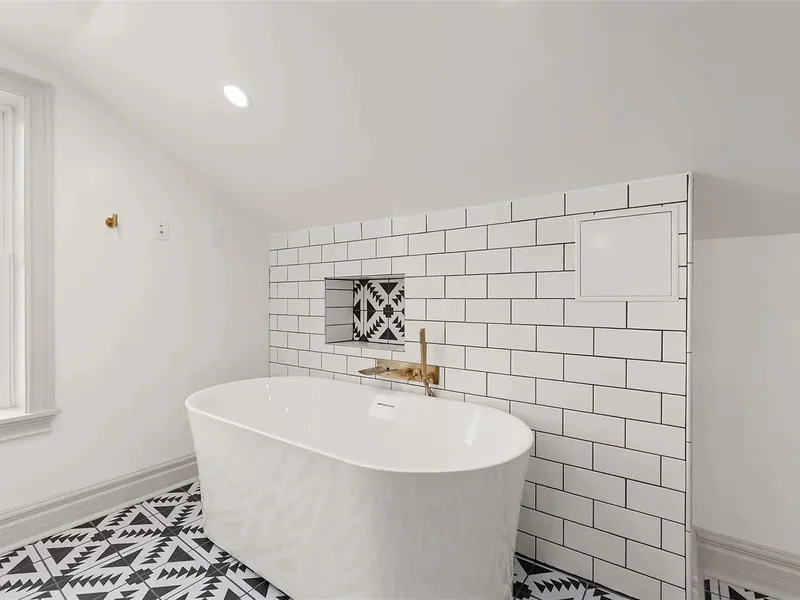
- Upscale: $81,612. Enlarges a 35-square-foot bathroom to 100 square feet without an addition and relocates every fixture, adding a tiled 42 by 42 inch shower with frameless glass, a freestanding soaking tub, a stone counter with two sinks, a separate toilet compartment, a humidistat-controlled fan and electric floor heat.
- Universal design: $42,183. Makes a 5 by 7 foot bathroom wheelchair-accessible: a zero-threshold entry and 36-inch door, a curbless tiled shower with a fold-out seat and thermostatic valve, a comfort-height toilet, radiant heat under luxury vinyl tile and switches reachable from a seated position.
The upscale project costs more than three times the midrange one, and most of the difference is scope, not finishes: walls move, every fixture moves and the room nearly triples in size. In the 2024 St. Louis data, the same three projects cost $24,817, $77,523 and $40,070.
Published benchmarks side by side
St. Louis was dropped from the 2025 Cost vs. Value report. Its West North Central region lists 10 cities for 2025, and Kansas City is the only one in Missouri. The 2024 report is the latest with St. Louis data, so the table shows both.
| Cost vs. Value project | 2025 national | 2025 West North Central | 2024 St. Louis |
|---|---|---|---|
| Bath remodel, midrange | $26,138 | $26,879 | $24,817 |
| Bath remodel, upscale | $81,612 | $83,153 | $77,523 |
| Bath remodel, universal design | $42,183 | $43,572 | $40,070 |
Houzz and Angi measure something different: what homeowners reported spending, across a wider mix of jobs.
| Source | What it measures | Figure |
|---|---|---|
| Houzz and Home Study, 2026 | National median, all primary bathroom projects in 2025 | $15,000; 90th percentile $50,000 |
| Houzz and Home Study, 2026 | Major remodel, primary bath of 100 sq ft or more | $30,000 median; 90th percentile $75,000 |
| Houzz and Home Study, 2026 | Major remodel, primary bath under 100 sq ft | $18,000 median; 90th percentile $44,000 |
| Houzz and Home Study, 2026 | National median, guest bathroom projects | $7,000 |
| Angi, 2026 | St. Louis average | $11,246; most pay $6,423 to $16,519 |
| Angi, 2026 | National full remodel range | $25,000 to $80,000 |
Houzz counts a primary bath remodel as major when at least the vanity or cabinetry, counters and toilet are replaced, and its figures include do-it-yourself projects and are not adjusted for inflation. Angi defines a full remodel as replacing every fixture and surface without moving the plumbing. The 2025 Cost vs. Value costs include a standard markup of 10% on materials and 10% on labor, which JLC notes many contractors may consider low.
What moves the number in a St. Louis bathroom
Size matters less than you might think. Angi's 2026 St. Louis guide puts the average at about $150 per square foot, but a small bathroom needs nearly the same plumbing, wiring and waterproofing as a large one. The bigger swings come from these decisions.
Moving fixtures
Leaving the toilet, the tub or shower, and the sink where they are keeps plumbing work, and the floor and ceiling repairs that come with it, to a minimum. Angi's 2026 guide says changing the floor plan can add $5,000 for plumbing and electrical work. The toilet is the hardest fixture to move because its drain is the largest and has to slope and vent correctly. On an upper floor, moving it usually means opening the ceiling below.
Tile: how much and what kind
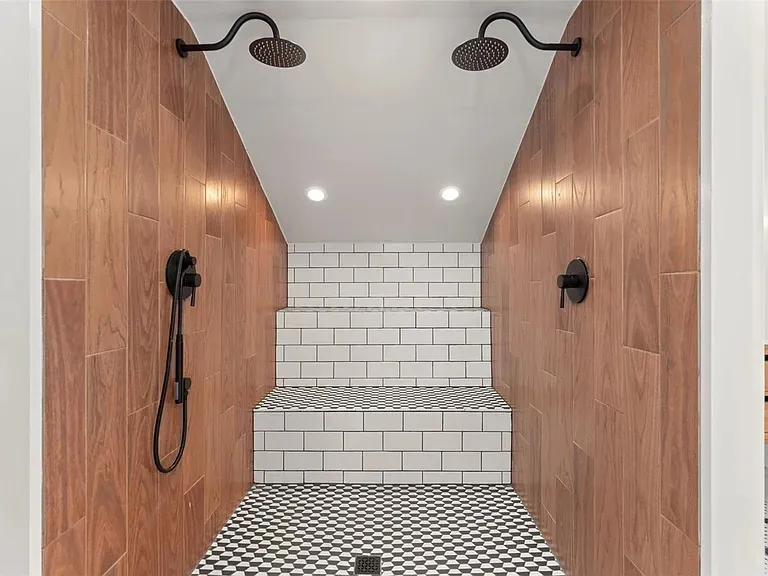
Tile is priced by area and by labor, and labor is where the differences hide. A tub surround and a tiled floor, the midrange scope, is a different job from floor-to-ceiling tile in a walk-in shower with a bench, a niche and a patterned floor. Small mosaics, hex tile and patterns take longer to set than large plain tile, and large-format tile needs flatter walls and floors. Angi's 2026 guide puts retiling at $10 to $50 per square foot with midrange materials, labor included.
Showers, glass and tub-to-shower conversions
The shower is often the biggest single decision. Angi's 2026 guide puts the average shower installation at $8,200, from as little as $600 for a prefabricated kit to more than $10,000 for a custom shower. Multiple heads and body sprays use more water than an older supply line or water heater may deliver, and frameless glass is measured only after the tile is set, which adds lead time.
A tub-to-shower conversion sounds simple, but it usually means removing the old tub (cast iron ones are heavy), building a sloped shower floor, moving the valve, waterproofing the walls and adding glass. The closest Cost vs. Value benchmark is the universal design remodel, which replaces the tub with a curbless shower: $42,183 nationally in 2025. If it is the only tub in the house, ask a local real estate agent how buyers will see that before you take it out.
Waterproofing and ventilation
Tile and grout are not waterproof. What keeps water out of the walls and floor is the membrane or backer system behind the tile, the slope of the shower floor and careful detailing at niches, benches and seams. None of it shows when the job is done, which makes it the worst place to save money.
Under the 2018 International Residential Code, which the City of St. Louis enforces, a bathroom needs either a window of at least 3 square feet, half of it openable, or artificial light and an exhaust fan ducted directly outdoors. The fan must be rated for at least 50 cubic feet per minute intermittent or 20 continuous, and exhaust cannot be dumped into an attic. In the City, installing an exhaust fan takes a mechanical permit issued to a licensed mechanical contractor.
Older St. Louis bathrooms: what is behind the walls
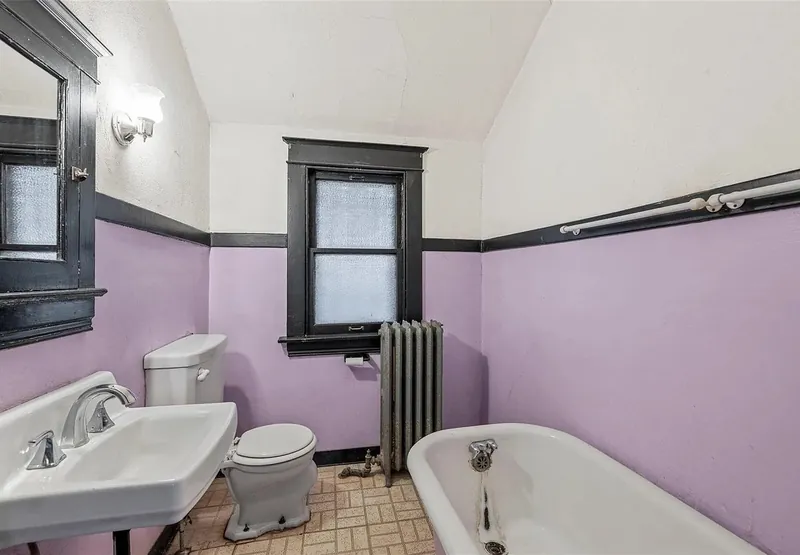
Census estimates for 2024 show that 58% of housing units in the City of St. Louis were built in 1939 or earlier, and the median year built in St. Louis County is 1969. An original bathroom in either place can hide problems a newer house would not.
- Cast iron and galvanized pipes. Old cast iron drains and stacks can be cracked or corroded inside, and EPA notes that lead particles can attach to galvanized supply pipes and get into drinking water. The easiest time to replace them is while the walls are open, and in the City, replacing soil stacks, vent pipes or water supply lines requires a plumbing permit.
- Radiators. A radiator takes wall space a new layout may want, and moving one means rerouting heating pipes. Electric floor heat, part of both the upscale and universal design benchmarks, is one alternative.
- Plaster. The National Park Service notes that plaster was the wall finish for nearly all buildings until the 1930s or 1940s. In a shower, old plaster generally comes off so a tile backer and waterproofing can go onto sound framing.
- Uneven floors. Tile needs a flat, stiff floor. Old joists may sag or may have been notched for drain lines decades ago, and leveling or reinforcing them adds carpentry before any tile goes down.
- Lead paint and old flooring. EPA's lead guidance, updated in 2025, says 87% of homes built before 1940 have some lead-based paint, and paid work that disturbs paint in a pre-1978 home falls under EPA's lead-safe rules unless the paint is tested and found lead-free. Old vinyl tile, sheet flooring backing and adhesives can contain asbestos, which EPA says you generally cannot identify by looking. See our lead-safe renovation guide.
Permits and inspections
Cosmetic work often needs no permit: the City of St. Louis lists floor tile and plaster patching among work that usually does not require a building permit. Most bathroom remodels go further. In the City, new fixtures, soil pipe connections and replaced stacks, vents or water lines need a plumbing permit, issued only to City-licensed plumbing contractors. Exhaust fans need a mechanical permit, electrical work needs its own permit, and removing or adding a partition needs a building permit.
St. Louis County, which issues permits in unincorporated areas and in municipalities that contract with it, lists bath remodels among work that needs a building permit, and even a same-size vanity swap needs a plumbing permit to reset the sink. Cities with their own building departments set their own rules; Webster Groves, for one, requires a building permit for a bath remodel.
Permit fees are modest: Angi's 2026 St. Louis guide puts the average remodel permit fee at about $190. Under the City's 2018 code, a permitted alteration can also require smoke and carbon monoxide alarms where the code calls for them in a new house, though work limited to plumbing or mechanical systems is excepted. Confirm the details with your building department; our St. Louis permit guide explains who issues what.
Resale value, with honest caveats
Here is the share of cost recouped at sale, as Cost vs. Value estimates it:
| Project | 2025 national | 2025 West North Central | 2024 St. Louis |
|---|---|---|---|
| Bath remodel, midrange | 80% | 76.8% | 57.6% |
| Bath remodel, upscale | 41.7% | 39.7% | 39.5% |
| Bath remodel, universal design | 61.2% | 59.3% | 38.8% |
Missouri markets come in below the national figures: a midrange bath recouped 57.6% in St. Louis in 2024 and 61.1% in Kansas City in 2025. NAR's 2025 Remodeling Impact Report estimated 50% cost recovery for a bathroom renovation and 56% for adding a new bathroom, and gave bathroom renovation a Joy Score of 9.8 out of 10.
Read these with care. Cost vs. Value resale figures are Realtors' estimates (the 2025 survey drew more than 6,000), not sale prices, and JLC calls the report a national snapshot that is less reliable for a particular address. NAR's 2025 report based its costs on a house built after 1978 with no concealed problems, which rules out most homes in the City of St. Louis. And universal design, with its low St. Louis return, pays off mainly by letting you stay in your home.
Budgeting and contingency
Labor is the main reason small bathrooms are not cheap. Angi's 2026 guides put it at 40% to 65% of a bathroom budget, so scope moves the total more than the price of a faucet does.
Overruns are common. In Houzz's 2026 study, 37% of homeowners who renovated in 2025 spent more than planned and 35% landed on budget. Higher-than-expected product and service costs (52%), pricier product choices (35%) and unexpected complexity (32%) led the reasons.
Make your selections before demolition, and hold a contingency for what the walls reveal. Angi's 2026 kitchen guide recommends a cushion of at least 10% of the budget, and its bathroom guide warns that hidden water damage, mold and plumbing or electrical updates can surface once walls and floors are open. In an original bathroom in an older house, plan for more than the minimum.
Getting an accurate number for your bathroom
Benchmarks get you into the right range. An accurate number comes from a written scope for your bathroom, one that spells out:
- The layout, and which fixtures move.
- Each fixture, faucet and valve by model, plus the shower glass.
- Tile areas, tile selections and the waterproofing system behind them.
- The exhaust fan and its route outdoors, and any electrical or heating changes.
- Allowances as dollar amounts, what is excluded, and how surprises behind the walls will be priced.
Bring photos, rough measurements and a budget range to the first meeting. Our consultation checklist lists what helps most.
At Modern Design + Build, the first consultation is complimentary, and our design team produces the drawings, interior design and 3D renderings that let you see the new room before the old one comes out. See how we approach bathroom remodeling, or book a free consultation.
- Cost vs. Value 2025: national project data, Journal of Light Construction (Zonda)
- Cost vs. Value 2025: West North Central, Journal of Light Construction (Zonda)
- Cost vs. Value 2025: Kansas City, Mo., Journal of Light Construction (Zonda)
- Cost vs. Value 2024: St. Louis, Mo., Journal of Light Construction (Zonda)
- Bath Remodel, Midrange (2025 project definition), Journal of Light Construction
- Bath Remodel, Upscale (2025 project definition), Journal of Light Construction
- Bath Remodel, Universal Design (2025 project definition), Journal of Light Construction
- 2025 Cost vs. Value Report: Key Trends, Journal of Light Construction
- Cost vs. Value 2025: Methodology, Journal of Light Construction
- Cost vs. Value 2025: What the Numbers Mean, Journal of Light Construction
- 2026 U.S. Houzz and Home Renovation Trends Study, Houzz
- How Much Does a Bathroom Remodel Cost? (updated July 2026), Angi
- How Much Does a Bathroom Remodel Cost in St. Louis, MO? (updated February 2026), Angi
- Complete House Renovation Cost in St. Louis, MO (updated July 2026), Angi
- How Much Does a Kitchen Remodel Cost? (updated September 2026), Angi
- 2025 Remodeling Impact Report, National Association of Realtors and NARI
- Year Structure Built (B25034), ACS 2024 5-year estimates, U.S. Census Bureau
- Median Year Structure Built (B25035), ACS 2024 5-year estimates, U.S. Census Bureau
- Preservation Brief 21: Repairing Historic Flat Plaster, National Park Service
- How Can I Tell If My Home Contains Lead-Based Paint?, U.S. EPA
- Lead Renovation, Repair and Painting Program, U.S. EPA
- 40 CFR 745.82, Applicability of the RRP Rule, Electronic Code of Federal Regulations
- Lead in Drinking Water (2017 fact sheet), U.S. EPA
- Protect Your Family from Exposures to Asbestos, U.S. EPA
- When a Residential Building Permit is Needed, City of St. Louis
- Apply for a Plumbing Permit, City of St. Louis
- Apply for a Mechanical Permit, City of St. Louis
- Building Codes Adopted by the City, City of St. Louis
- Residential Building Construction Permits, St. Louis County
- Kitchen and Bathroom Permits, City of Webster Groves
- 2018 International Residential Code, Chapter 3: Building Planning, International Code Council
- 2018 International Residential Code, Chapter 15: Exhaust Systems, International Code Council