Ask three people what their old St. Louis house cost to renovate and you may hear three unrelated numbers. Two houses of the same size can need very different budgets, and the difference rarely comes from the countertops. It comes from what is behind the plaster, under the floors and up on the roof.
This guide covers where the money goes, what benchmarks exist and how to reach a number you can plan around.
- No reliable published per-square-foot cost exists for gutting an old St. Louis house. Condition, not size, drives the number.
- 58 percent of homes in the City of St. Louis were built before 1940, so plan for old wiring, old drains, plaster and lead paint.
- Budget the work you cannot see first: structure, roof, masonry and systems.
- Carry a contingency, and get your number from an assessment of the house, a written scope and a phased plan.
Why old-house costs vary so much
Most cost guides open with a per-square-foot range. For gutting an old St. Louis house, we have not found a reliable one, and we would be wary of anyone who quotes one before seeing the house.
The whole-house numbers that do get published describe much lighter work. Angi's St. Louis guide, updated in July 2026, puts the average house renovation at $30,970, with a range of $9,290 to $52,651. Yet the 2025 Cost vs. Value report for the West North Central region, which includes Missouri, puts a midrange major kitchen remodel at $80,850 and a midrange bath remodel at $26,879. Those two rooms alone top $100,000, so that average describes updates, not a gut.
What moves the number in an older home:
- The bones. Sagging framing or a leaking roof gets paid for before anything you will see.
- What is original. In a house built before 1940, original wiring, drains and heating can be more than 85 years old.
- The scope. A cosmetic refresh, a systems renovation and a full gut are different projects, not price points.
- Old-house rules. Lead-safe work, asbestos handling and historic review add labor, time or both.
What the City's housing stock means for your budget
In the City of St. Louis, Census estimates for 2020 to 2024 put 58 percent of housing units in buildings from 1939 or earlier and about 86 percent before 1980.
Plaster was the wall surface for nearly all buildings until the 1930s or 1940s, and lead-based paint was sold for use in homes until 1978. Piecemeal updates can also hide original systems behind newer finishes.
The envelope: structure, roof and masonry
Structure and foundation. Expect a close look at floor framing, bearing walls, the foundation and any later rear additions. In the City, cutting or removing structural beams, replacing joists or repairing foundations requires a building permit. St. Louis County's permit guide says bearing-wall alterations need structural drawings and calculations sealed by a Missouri architect or engineer. If you want an open floor plan, engineering is part of the job; see our guide to removing a load-bearing wall.
Roof, masonry and drainage. A roof leak or a clogged gutter can ruin a new interior fast, and on brick houses, repointing, chimney and parapet repairs are common line items. The National Park Service says a good repointing job is meant to last at least 30 years, and that causes such as leaking roofs or gutters, settlement or rising damp should be fixed first. In the City, a new roof needs a permit when the material changes or more than 25 percent of the sheathing is replaced. Our guide to St. Louis brick homes goes deeper on mortar and moisture.
The systems: electrical, plumbing and heating
Electrical. Knob-and-tube wiring was common from about 1880 to the 1940s. It has no ground wire, and the home inspectors' association InterNACHI says its risks come from age, past modifications and insulation packed around it, and that many insurers refuse to cover it. The model residential code sets a 100-amp minimum for a one-family home's service, and central air, an electric range or a car charger can outgrow an older, smaller service. In the City, service changes and rehab wiring require a City-licensed electrical contractor. Plan rewiring with any plaster work so walls are opened once.
Plumbing. Old houses can have lead or galvanized steel water service lines, cast iron drain stacks and clay sewer laterals. In the City, the property owner owns the water service line and, as of 2026, is responsible for replacing it. The Water Division's online viewer shows the recorded material of your line, and the City says it is pursuing grant funding and developing a zero-interest loan program. Replacing a sewer lateral, soil stack or supply line there needs a permit pulled by a City-licensed plumber. A camera inspection of the main drain before you budget is cheap insurance.
Heating and cooling. Steam and hot water radiators were common in homes by the late 1800s. Keeping a boiler and adding air conditioning usually means ductless mini-splits, which ENERGY STAR describes as a fit for older homes with radiators and no ductwork, or new ducts, which the Park Service recommends routing through existing closets, chases and shafts rather than finished rooms. Old heating pipes may also carry asbestos insulation, covered below.
Windows, walls, lead and asbestos
Windows. Original wood windows can often be repaired rather than replaced, and the Park Service's window guidance covers reglazing, new sash cords and similar fixes. In City historic districts, replacement needs approval. In any house built before 1978, window replacement always falls under EPA's lead-safe rules.
Plaster or drywall. The Park Service notes that three-coat plaster is strong, fire resistant and good at reducing sound, and that it is often less damaged than it first appears. Tearing it out adds demolition, dust control, disposal and new drywall, and demolishing painted surfaces in a pre-1978 house always falls under lead-safe rules. Our plaster walls guide compares repair and replacement.
Lead-based paint. EPA says 87 percent of homes built before 1940 have some lead-based paint, compared with 24 percent of homes built from 1960 to 1978. Under EPA's Renovation, Repair and Painting rule, which EPA administers in Missouri, anyone paid to disturb painted surfaces in a pre-1978 home must be certified and use lead-safe work practices. That setup and cleanup take time, so budget for them from day one. Our lead-safe renovation guide explains what to expect.
Asbestos. EPA's list of household materials that may contain asbestos includes coverings on steam and hot water pipes, old furnaces, vinyl floor tiles and their adhesives, and some textured paints. You cannot tell by looking, so EPA suggests an inspection by a trained, accredited professional before remodeling disturbs suspect materials. Missouri's state asbestos rules exempt most single-family homes, but in the City, abatement of more than 10 square feet, 16 linear feet or 3 cubic feet of asbestos-containing material falls under City Ordinance 71332, which the Health Department enforces.
Kitchens and baths: benchmarks for context
Kitchens and baths have the best regional benchmarks. Treat these Cost vs. Value figures as reference points, not quotes.
| Project | West North Central, 2025 | St. Louis, 2024 |
|---|---|---|
| Minor kitchen remodel, midrange | $27,880 | $27,102 |
| Major kitchen remodel, midrange | $80,850 | $80,423 |
| Major kitchen remodel, upscale | $159,347 | $156,216 |
| Bath remodel, midrange | $26,879 | $24,817 |
| Bath remodel, upscale | $83,153 | $77,523 |
St. Louis was left out of the 2025 edition, hence the 2024 column. In an old house, treat these as the budget for the room itself. New circuits, new drains or a beam where a wall used to be come on top. Our kitchen and bathroom cost guides go deeper.
Permits, historic review and sale inspections
Permits add time as well as fees. In the City, a renovation needs a building permit plus electrical, plumbing and mechanical permits where that work is involved, each pulled by a City-licensed contractor.
In the City's local historic districts, such as Soulard, Lafayette Square, Benton Park and Shaw, exterior work including windows, doors and tuckpointing needs Cultural Resources Office approval, and the office usually requires a permit even where the building code does not. Applications that meet the district standards are usually approved within a few days, while larger projects can go to the Preservation Board. Outside the City, rules vary by municipality. Our guides to remodeling permits and historic districts cover the details.
If you are buying, budget for the sale inspection too. The whole City is a Housing Conservation District, so a Certificate of Inspection is required before anyone occupies a home after a sale, and the City calls it a basic code inspection, not a guarantee of condition. Unincorporated St. Louis County inspects at every change of occupant, and municipalities set their own rules. Flagged items can become your first phase of work, so settle who pays for them in the sale contract.
How to get a real number
Plan a contingency
Old houses hide things until the walls are open. For comparison, FHA's 203(k) rehabilitation loans require a contingency reserve of at least 10 percent of the repair budget for houses 30 or more years old, and at least 15 percent when the utilities are not working when the work is written up (HUD, as of 2026). Treat that as a floor for a deep renovation, not a target. In Houzz's survey, 37 percent of homeowners who renovated in 2025 went over their initial budget, most often because products or services cost more than expected or the project proved more complex.
Look for incentives
- Missouri historic tax credit. Owner-occupied homes listed on the National Register or contributing to a historic district can qualify if rehabilitation costs exceed half of what you paid for the property. As of October 2026, the rate is 25 percent for most City of St. Louis properties and 35 percent for most properties outside the City and Kansas City, with credits capped at $250,000 for an owner-occupied home, and the law adds a location condition for some owner-occupied homes in the City. Check with the Missouri Department of Economic Development, and see our historic tax credit guide.
- Federal credit. The 20 percent federal rehabilitation credit does not apply to owner-occupied homes.
- City lead program. The City inspects homes free where a child under six or a pregnant woman lives, and when hazards turn up, owners may apply for help based on income, children and owner occupancy.
- City tax abatement. The St. Louis Development Corporation can freeze the assessment on improvements, typically for five to ten years, generally for major rehabilitation. Apply before construction starts, with support from your alderman and neighborhood organization.
Talk to a tax professional before counting on a credit or abatement.
Get an assessment, a written scope and a phased plan
- Assess the actual house with the people who will price it: structure, roof and masonry, electrical, drains, heating, windows and plaster, plus lead and asbestos testing wherever work will disturb old materials.
- Write the scope down, with allowances for finishes you have not chosen yet, so bids can be compared line by line and changes can be priced.
- Phase it. If the budget will not cover everything at once, do the envelope and systems first and the finishes later. A new kitchen is wasted under a leaking roof.
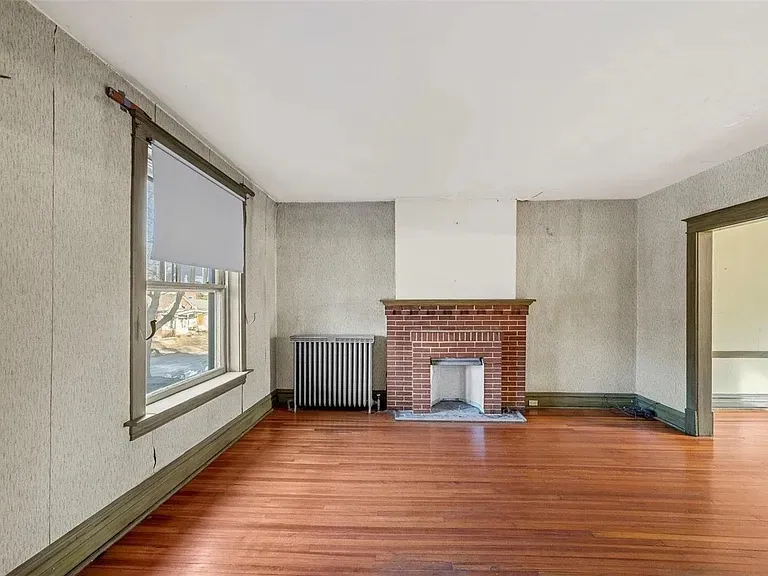
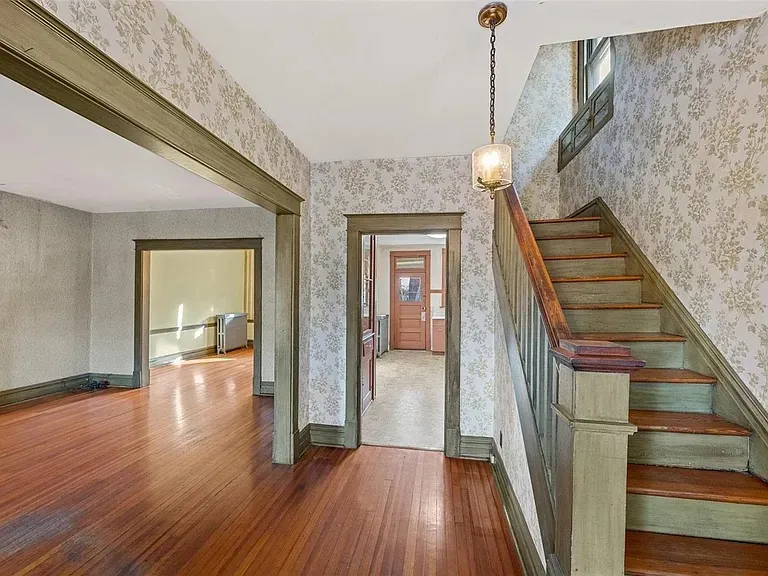
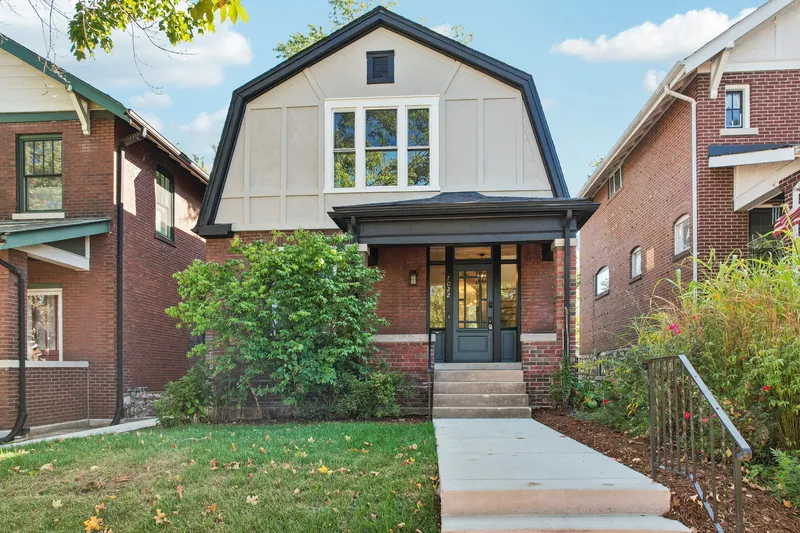
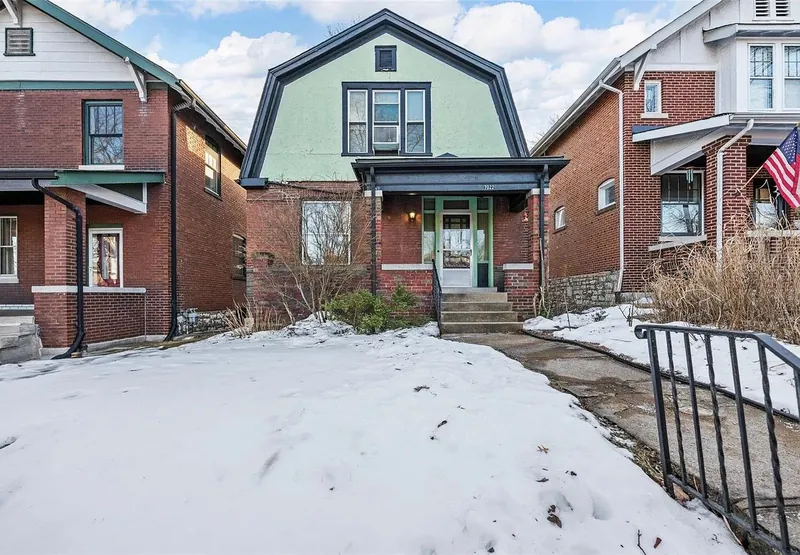
Our Ethel project shows where that work can lead: a brick home with a gambrel second story, taken from wallpaper and dark stained trim to a bright interior, with a new kitchen and bath, refinished hardwood floors and a repainted exterior.
Modern Design + Build offers a complimentary first consultation, and our design services include architectural drawings, engineering, interior design and 3D renderings. If you are weighing an old house, book a free consultation and bring whatever you know about its history.
- Year Structure Built, St. Louis city, ACS 2020 to 2024, U.S. Census Bureau
- How Much Does a House Renovation Cost in St. Louis, MO?, Angi
- Cost vs. Value 2025: West North Central, Zonda and JLC
- Cost vs. Value 2024: St. Louis, Zonda and JLC
- 2026 U.S. Houzz and Home Study: Renovation Trends, Houzz
- FHA Single Family Housing Policy Handbook 4000.1, HUD
- When a Residential Building Permit Is Needed, City of St. Louis
- Residential Repairs and Renovations Guide, St. Louis County
- Preservation Brief 2: Repointing Mortar Joints, NPS
- Knob-and-Tube Wiring, InterNACHI
- Residential Code Section E3602, Service Size and Rating, UpCodes
- Electrical Permit, City of St. Louis
- Plumbing Permit, City of St. Louis
- Get the Lead Out, City of St. Louis Water Division
- Ductless Heating and Cooling, ENERGY STAR
- Preservation Brief 24: Heating and Cooling Historic Buildings, NPS
- Preservation Brief 9: Repair of Historic Wooden Windows, NPS
- Preservation Brief 21: Repairing Historic Flat Plaster, NPS
- How Can I Tell If My Home Contains Lead-Based Paint?, EPA
- Lead Inspection and Hazard Control Division, City of St. Louis
- Lead Renovation, Repair and Painting Program, EPA
- Renovation, Repair and Painting Program: Contractors, EPA
- Learn About Asbestos, EPA
- Protect Your Family from Exposures to Asbestos, EPA
- Asbestos, Missouri DNR
- Air Pollution Control, St. Louis Department of Health
- City Historic Districts, St. Louis Cultural Resources Office
- Applications and Permit Review, St. Louis Cultural Resources Office
- Residential Occupancy Permit, City of St. Louis
- Occupancy Permit Applications, St. Louis County
- Historic Preservation Tax Credits, Missouri SHPO
- Historic Preservation Tax Credit Program, Missouri DED
- Section 253.550, Revised Statutes of Missouri
- About the Federal Historic Tax Credit, NPS
- Real Estate Tax Abatement, St. Louis Development Corporation