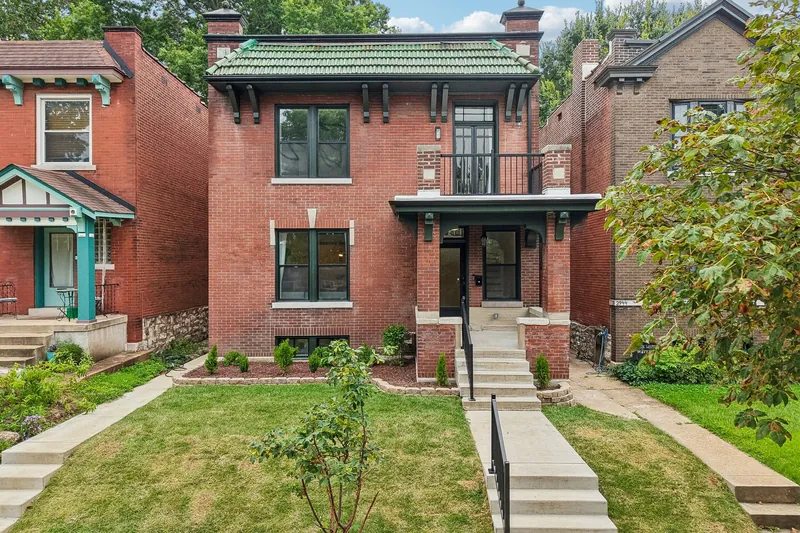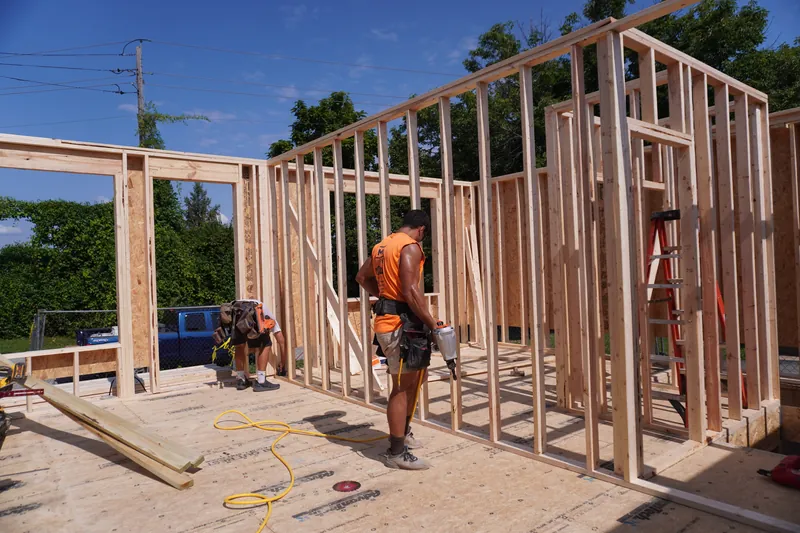
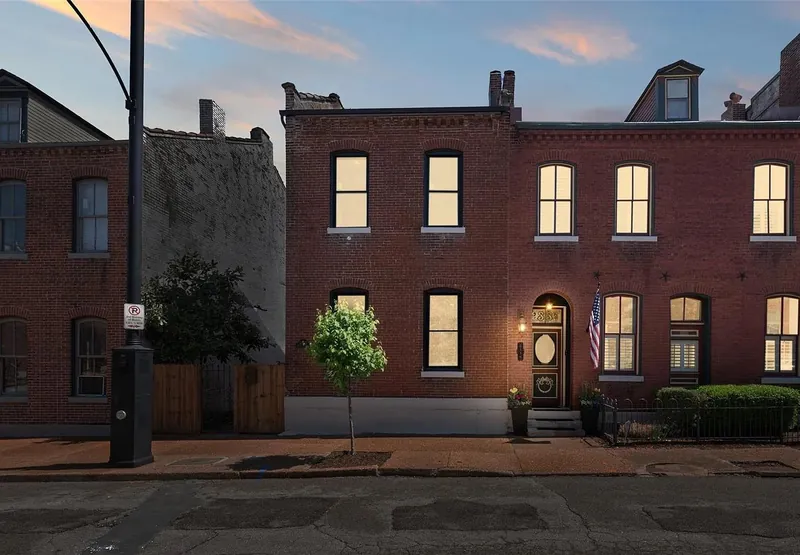
The City of St. Louis has 18 local historic districts, from Soulard and Lafayette Square to Hyde Park, The Ville and the Central West End. If your house is in one, the inside is largely yours to change. The outside follows standards written for your district, and changes go through the City's Cultural Resources Office before a building permit is issued.
Work that meets the standards usually clears review in a few days, so the real job is planning for it. This guide covers what gets reviewed, how the process runs, how long to allow and how county cities handle the same questions. Details change, so read them as of October 2026 and confirm with the Cultural Resources Office or your building department.
- In the City's 18 local historic districts, exterior changes are reviewed by the Cultural Resources Office against that district's own standards before a permit is issued.
- Review can reach work that needs no building permit elsewhere in the City, such as exterior painting, gutters, tuckpointing and window or door replacement in the same opening.
- Work that meets the standards is usually approved within a few days, and small projects can be approved over the counter.
- National Register listing alone places no requirements on a private owner. Local district designation is what brings design review.
- Kirkwood, Webster Groves, University City, Clayton, Maplewood, Florissant and the City of St. Charles run their own review.
How review works in the City of St. Louis
The Cultural Resources Office (CRO), part of the Planning and Urban Design Agency, is the City's preservation agency. It reviews exterior work in local historic districts, on City Landmarks and on public parks and buildings. It also reviews demolitions in Preservation Review Districts and National Register districts.
When you apply for a permit for exterior work in a district, the Building Division refers the application to the CRO automatically. Under the City code, no permit can be issued until the CRO finds the work complies with the district standards or the Preservation Board recommends approval. Review is about the exterior. Interior remodeling still needs the ordinary permits, but not design review.
The Preservation Board is a nine-member board of citizens and design professionals. It recommends new districts and landmarks, reviews major projects in historic districts and hears appeals of decisions by the CRO's director. It generally meets at 4 PM on the fourth Monday of each month at 1520 Market St.
What exterior work needs review
Start with the Building Division's own permit criteria. In a City historic district or on a City Landmark, exterior painting, gutters and downspouts, windows, doors, tuckpointing, all fences, awnings and canopies, and similar exterior work need approval. Elsewhere in the City most of that work needs no building permit at all, but in a district the CRO usually requires one. The Building Division says this is done "to protect the exterior appearance of the building."
Bigger work needs review anywhere in a district: additions, porches and decks, garages, new construction and demolition.
The details come from your district's standards, which can be more specific than the general list and sometimes more relaxed. Soulard's posted standards show how this works:
- Street-facing walls carry most of the rules. Unless the standards say otherwise, they apply only to Public Facades: walls that face a public street, plus the part of a side wall set forward of the house next door.
- Some maintenance is exempt. Tuckpointing, painting wood or metal elements, and repainting painted masonry the same color or a color resembling the brick underneath count as routine maintenance. Painting brick that has never been painted is prohibited.
- Windows must match. Replacement windows on a street-facing wall must duplicate the originals, in wood or finished aluminum, with matching profiles, the same pane arrangement and the same way of opening (double-hung may become single-hung). New window openings in a street-facing wall are not allowed.
- Modern equipment stays out of sight. Skylights cannot go on a roof slope that faces the street, solar collectors cannot be visible from a street and rooftop air conditioners cannot be visible from the street in front.
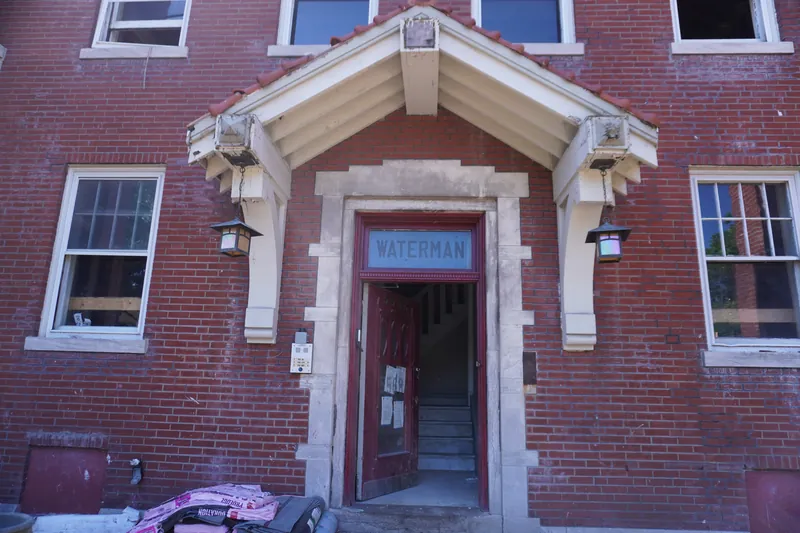
Every district has its own standards
Each local historic district is created by its own ordinance, and each carries its own rehabilitation and design standards, developed with neighborhood residents. A new district starts with a petition from Preservation Board staff, the ward alderman or at least 10% of property owners, followed by public hearings and approval by both the Preservation Board and the Board of Aldermen.
The CRO lists the 18 districts in two groups:
- City historic districts: 4100-4300 Lindell, Benton Park, Cherokee-Lemp Brewery, Kingsbury-Washington Terrace, Lafayette Square, McKinley Heights, North I-44, Tower Grove East, Union Station and The Ville.
- Certified local historic districts: Central West End, Compton Hill, Fox Park, Hyde Park, Shaw Neighborhood, Skinker-DeBaliviere-Catlin Tract-Parkview, Soulard Neighborhood and Visitation Park. The Department of the Interior has found these eligible for the National Register, so properties in them have the benefits of formal listing.
Standards differ from district to district and get revised. Soulard has been a local district since 1972. Lafayette Square, a City district since 1972, enacted its current standards in April 2012 and updated them in February 2019. Find your district's ordinance and standards on the CRO website and read them before you design anything.
Two related designations work differently. City Landmarks are individual sites and buildings, and the CRO reviews changes to their designated features against Landmark Standards. Preservation Review Districts cover demolition only.
Several districts hold some of the city's oldest house types. Soulard's 1972 National Register nomination describes the half-flounder house and its single sloping roof, and the earliest houses in Benton Park include flounder houses. Our guide to St. Louis flounder houses covers the form.
How the process works, and how long to allow
- Confirm the address. The City's Address & Property Search shows a Historic Districts line for each parcel under Boundaries and Geography. The CRO (314-657-3865) can confirm.
- Read your district's standards and note which walls count as street-facing.
- For small projects, use the Hotspot desk. The CRO's Hotspot desk in City Hall (Room 424) can approve window and door replacement, tuckpointing, porches and decks, garages and carports, and fences over the counter when they comply, so the permit can be issued in one stop. No appointment is needed. Posted hours have varied, so call ahead.
- For larger projects, ask for a Preliminary Review. Send the CRO's Preliminary Review Form with photographs and preliminary or schematic plans. There is no charge, and projects with Preliminary Approval get expedited review when the permit application comes in.
- Apply for the permit through the City's STL City Permits portal or at the Permits Section in City Hall. The Building Division routes it to the CRO.
As for timing, the CRO says applications in its areas are usually approved within a few days, unless the work does not comply with the standards or more information is needed. As of October 2026, the City code sets the outer limits. The CRO or Preservation Board has 45 days from the application date to send its determination, and the permit must be granted or denied within 50 days. A project that goes to the Preservation Board waits for the monthly meeting, and a preliminary agenda is posted about 10 days ahead, so plan around that date.
If the answer is no: appeals
If a permit is denied under the district standards, you can file what the code calls a preservation appeal. The notice goes to the CRO within 30 days after the Building Division acts on the permit, and it must state the grounds. The Preservation Board must hold a hearing within 45 days of the filing and generally decide within 55.
The code also directs the Board to try to reconcile a proposal with the standards. If you revise the application to match that reconciliation, the permit is approved as long as it meets the building code and other requirements. It pays to come to a hearing ready to discuss alternatives.
The Preservation Board acts as an administrative law judge. Its decisions are binding and can be appealed only to circuit court, except demolition denials, which may go to the Planning Commission. At that stage, talk to an attorney. In a Preservation Review District, a demolition decision can be appealed to the Preservation Board within 15 days, and then to the Planning Commission.
Local districts and the National Register are different things
The National Register of Historic Places, created by the National Historic Preservation Act of 1966, is a national record of significant buildings, sites and districts. In the City's words, listing a building "does not place any requirements on a private owner." It does not trigger local review of alterations unless federal funds or demolition are involved, and the CRO does review demolitions in National Register districts.
Local district designation is what brings design review. Some neighborhoods have both: Soulard and Lafayette Square were listed on the National Register in 1972 and are also local districts. Others have only the National Register listing. The Tower Grove Heights district (Arsenal, Grand, McDonald and Gustine, listed 2001) and the Holly Hills district (listed 2016) are on the National Register but are not among the 18 local districts, so ordinary exterior changes to homes there do not go through district design review.
Listing has a practical upside. The City notes that National Register properties and contributing buildings in National Register districts are eligible for federal and state rehabilitation tax credits. Our guide to Missouri historic tax credits explains the programs. Talk to a tax professional before you count on one.
Historic review outside the City
In St. Louis County and St. Charles, each city decides whether to have historic districts and how to review them. Some boards are preservation commissions, and some are design boards that review exterior changes citywide. The table reflects each city's published rules as of October 2026, so confirm with the city before you plan.
| City | Who reviews | What it covers |
|---|---|---|
| Kirkwood | Landmarks Commission | Exterior changes to its 85 landmarks, and demolition and new construction on landmark sites and in its nine local historic districts. A Certificate of Appropriateness comes before the building permit. |
| Webster Groves | Architectural Review Board and Historic Preservation Commission | New construction and renovations that change a main building's exterior look, with guidelines for the Central Webster, Webster Park, Marshall Place and Old Webster districts. A 2014 city guide says demolishing or moving any part of a landmark or district building needs a Historic Preservation Commission Certificate of Appropriateness. |
| University City | Historic Preservation Commission, advising Planning & Zoning | Six local historic districts, including Parkview and Clifford Row, and two local landmarks, under ordinances enforced by Planning & Zoning staff |
| Clayton | Architectural Review Board | Exterior changes that affect appearance, citywide. National Register residential districts can become local districts by owner petition and ballot, and the board then issues Certificates of Appropriateness there. |
| Maplewood | Design & Review Board and Historic Preservation Commission | Every permit for exterior alterations, repairs or maintenance that affect appearance, including fences and signs |
| Florissant | Landmark Historic District Commission | Exterior renovation of landmarks and contributing buildings in the historic district, under the Old Town Guidelines |
| Ferguson | Landmarks Commission | Advisory review of exterior plans for more than 20 designated landmarks |
| St. Charles (city) | Historic Landmarks Preservation and Architectural Review Board | 26 landmarks and six districts with more than 3,000 properties. Windows, doors, siding and porches may need approval. |
Brentwood and Ladue also have Architectural Review Boards for exterior work, but those are design boards, not historic district commissions.
Practical advice before you plan exterior work
- Check the address first. Before you design, and ideally before you buy, find out whether the house is in a local district, is a landmark or sits in a Preservation Review District.
- Bring what reviewers need. The CRO's Hotspot page asks for good photographs of the property, a site plan with dimensions, and plans or a description of the work. For windows and doors, add the manufacturer's product sheet showing material, profile and pane layout, since those are the details standards regulate. If you are rebuilding a missing porch or cornice, photographs of a matching original nearby help. Soulard's standards call that a Model Example.
- Keep the street-facing character. Repair original windows, doors, cornices and brick where you can, and match them when you replace. Put additions, mechanical units and solar panels where the street cannot see them.
- Do not skip review. The City code gives the CRO and Preservation Board the power to restrain work done in violation and have it corrected, and each day a violation continues is a separate offense.
- Put review on the schedule so a monthly board date does not hold up the trades.
The same approach works outside a district. On our Ethel renovation, shown below, the brick base, gambrel roofline and window pattern stayed while the colors and trim changed.
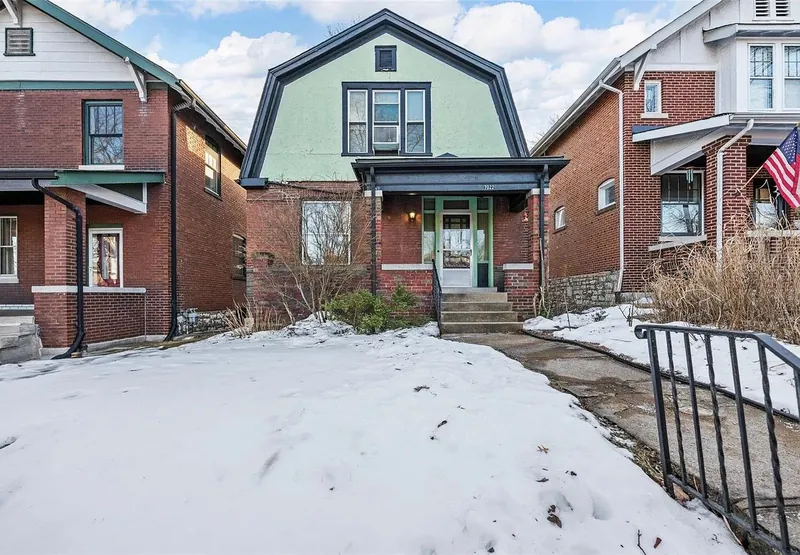
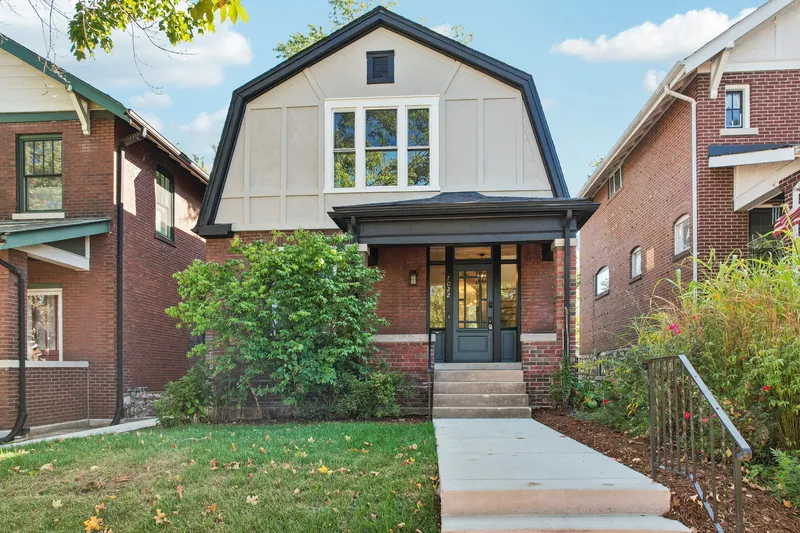
Modern Design + Build offers historic restoration, and our design services include architectural drawings and 3D renderings, which give reviewers a clear picture of what you intend. If your house is in a district, start with a free consultation.
- Cultural Resources Office, City of St. Louis
- City Historic Districts, City of St. Louis Cultural Resources Office
- Applications and Permit Review, City of St. Louis Cultural Resources Office
- Cultural Resources Office Hotspot Desk, City of St. Louis
- CRO Hotspot, City of St. Louis Cultural Resources Office
- Preservation Board, City of St. Louis
- City Landmarks, City of St. Louis Cultural Resources Office
- Preservation Review Districts, City of St. Louis Cultural Resources Office
- National Register of Historic Places, City of St. Louis Cultural Resources Office
- Residential Building Permit Criteria, City of St. Louis Building Division
- Building Permit, City of St. Louis Building Division
- Title 24, Cultural Resources, Revised Code of the City of St. Louis (Municode, version of June 17, 2026)
- Soulard Historic District, City of St. Louis Cultural Resources Office
- Soulard Historic District ordinance and standards, City of St. Louis Cultural Resources Office
- Lafayette Square Historic District, City of St. Louis Cultural Resources Office
- Address & Property Search, City of St. Louis
- Missouri National Register Listings: St. Louis City, Missouri State Historic Preservation Office
- Soulard Neighborhood Historic District nomination, Missouri State Historic Preservation Office
- Benton Park District nomination, Missouri State Historic Preservation Office
- Landmarks Commission, City of Kirkwood
- Historic Preservation, City of Kirkwood
- Architectural Review Board, City of Webster Groves
- Historic Preservation in Webster Groves, City of Webster Groves
- Historic Preservation, University City
- Historic Districts and Landmarks Map, University City
- Clayton Code: local historic district designation (Ord. 6054), eCode360
- Building Services, City of Clayton
- Design and Review Board and Historic Preservation Commission, City of Maplewood
- Historic District and Landmark Property, City of Florissant
- Ferguson Landmarks Commission, City of Ferguson
- Historic Preservation, City of St. Charles
- Building and Occupancy Permits, City of Brentwood
- Building Department FAQs, City of Ladue