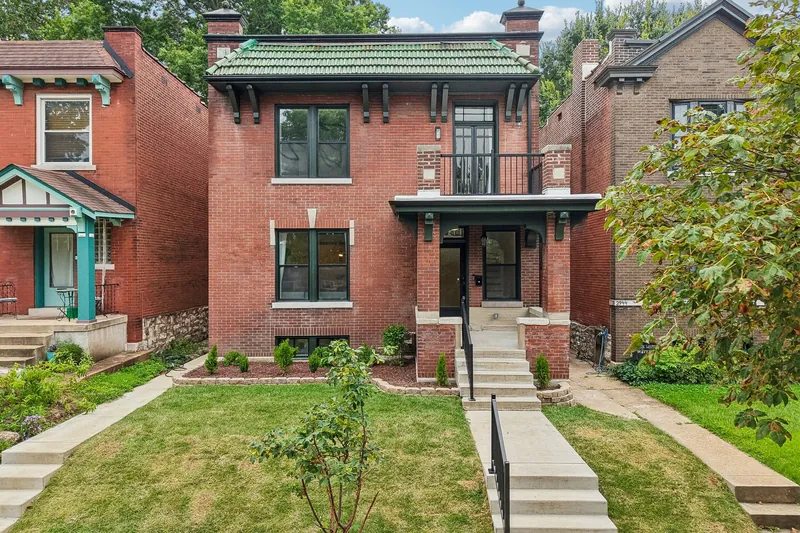
If you own a historic house in St. Louis and are planning a serious renovation, Missouri may cover part of the cost. Its historic preservation tax credit returns a share of eligible rehabilitation spending as a credit against state income tax, and unlike the federal credit, it is open to homes their owners live in.
It also comes with paperwork, firm timing rules and a messy recent legal history. Here is how it works as of October 2026, according to the statute, the Missouri Department of Economic Development (DED) and the State Historic Preservation Office (SHPO). This is general information, not tax advice.
- The state credit is 25 percent of qualified rehabilitation costs, or 35 percent outside Kansas City and the City of St. Louis. Owner-occupied homes are capped at $250,000 in credits.
- Qualified spending must exceed 50 percent of what you paid for the property.
- The house must be listed in the National Register, or contribute to a National Register district or a federally certified local district.
- Apply before work starts. Costs incurred before DED receives your application generally do not count.
- The federal 20 percent credit does not cover a home you live in, and City of St. Louis owners should ask DED how a 2024 "distressed community" rule applies to them.
How the Missouri credit works
DED runs the program and issues the credits. SHPO, part of the Missouri Department of Natural Resources, reviews the work against the Secretary of the Interior's Standards for Rehabilitation, and DED decides based on SHPO's recommendation.
The credit reduces your Missouri tax dollar for dollar. It is not refundable, but unused credit can be carried back three years and forward 10 years, and credits can be sold or transferred.
The rate depends on location. The statute sets 35 percent in a "qualifying county," a term that excludes Kansas City and any "city not within a county," which here means the City of St. Louis. Elsewhere, and for any project using state low-income housing tax credits, the rate is 25 percent.
| Where the home is | Rate, as DED summarizes it |
|---|---|
| City of St. Louis | 25% |
| St. Louis County, St. Charles County or Jefferson County | 35% (25% with state low-income housing credits) |
DED's summary puts 35 percent "outside Kansas City or St. Louis City." Confirm the rate for your address with DED before you budget around it.
Owner-occupied homes have their own limit: no more than $250,000 in credits for a single-family home occupied by the applicant or a relative within the third degree. That cap is reached at $1 million of qualified costs at 25 percent, or about $714,000 at 35 percent.
Does your home qualify?
SHPO says the state credit "is available to both commercial properties and owner-occupied homes," and the same tests apply to both.
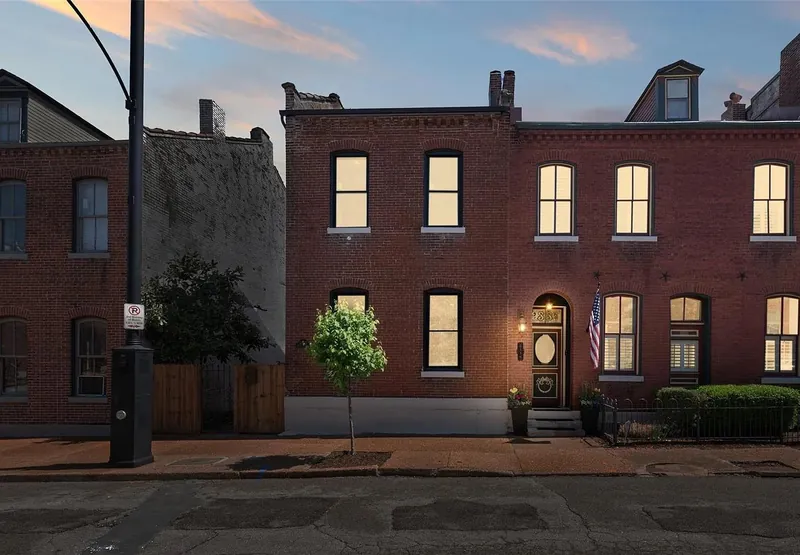
The building must be a certified historic structure. In SHPO's words, it must be "listed individually on the National Register of Historic Places or certified as contributing to either a National Register District or a Certified Local District." Age alone does not qualify a house, and neither does local designation: DED's FAQ says a local district counts only if it "has also been certified by the U.S. Department of Interior."
In the City of St. Louis, SHPO lists eight certified local districts: Central West End, Compton Hill, Fox Park, Hyde Park, Shaw, Skinker-DeBaliviere/Catlin Tract/Parkview, Soulard and Visitation Park. Your building must also count as contributing. SHPO posts district maps and National Register listings by county, and its staff can confirm your status.
You must spend enough. Qualified costs must exceed 50 percent of your basis, which DED defines as "the amount paid for the property at the time of acquisition." If you paid $200,000, you need more than $100,000 of qualified work. Because the test uses what you paid, someone who bought decades ago may face a much lower bar than a recent buyer. If you inherited the house, ask DED how basis is figured. The work must also meet the Standards, covered below.
What changed between 2024 and 2026
If you read about this program in 2025, some of it has changed:
- 2024. HB 2062, a long omnibus bill effective in August 2024, added the 35 percent rate outside Kansas City and the City of St. Louis, made nonprofits eligible and added new language on owner-occupied homes.
- Late 2025. KOMU reported on November 10, 2025, that Cole County Judge Brian Stumpe had ruled unconstitutional the HB 2062 provision barring homeowners associations from regulating backyard chickens. The Jefferson City News Tribune later reported that the ruling turned on Missouri's single-subject rule and that the entire bill was struck down, tax credit changes included. Accounts of the ruling's reach differ.
- 2026. HB 3080 passed on May 15, 2026, was signed by the governor on July 13 and took effect August 28, 2026. It re-enacts the program's statutes and applies them to applications received or approved on or after August 28, 2024.
As of October 1, 2026, DED's posted guidelines were still the August 28, 2024 version, and its FAQ tells applicants to ask which rules apply to their project.
The open question for City of St. Louis homes
The re-enacted law lets owner-occupied homes receive the applicable percentage, then adds: "For properties not located in a qualifying county, tax credits shall not be issued under this subdivision unless the property is located in a distressed community, as defined under section 135.530." The City is not a qualifying county.
State law defines a distressed community mainly by income: a municipality, or a group of census block groups with at least 2,500 people, where median household income is under 70 percent of the metro area's, plus some areas that held certain federal or state economic development designations. DED's published guidance does not say how it applies this to owner-occupied homes in the City. If you live in the City, ask DED in writing before planning around a credit, and talk to a tax professional.
What work counts, and what does not
Missouri builds on the federal definition of qualified rehabilitation expenditures, and anything that does not qualify federally does not qualify for the state credit. As DED's FAQ puts it, permanent improvements within the building's footprint are generally eligible, as are soft costs such as architect's fees. From DED's list of examples (August 28, 2024):
Usually counts
- Interior rehabilitation that does not enlarge the building
- Porches and decks, again excluding enlargement
- Architect, historic consultant and CPA fees, within DED's allowed time window
- General contractor profit, overhead and general requirements, within DED's caps
- Rebuilding a missing historic feature, if physical or photographic evidence shows what was there
Does not count
- The purchase price
- Additions, new construction or anything that increases the building's volume
- Appliances, furniture, closet systems and window treatments
- Landscaping, carports and work generally outside the footprint
- Tools, rework and service calls
- Anything paid with cash, gift cards or store credit, or paid by someone other than the applicant
The Standards cover interiors as well as exteriors, and two of the 10 matter a great deal in older St. Louis houses: deteriorated historic features "shall be repaired rather than replaced," and damaging treatments such as sandblasting "shall not be used." SHPO advises applicants not to get too attached to a plan, since it may have to change.
How to apply, step by step
The state application has two parts. Part 1, the preliminary application, shows that the building is historic and details the proposed work. Part 2, the final application, follows when the work is done. (The federal program uses three parts.)
- Talk to SHPO early. Its Architectural Preservation Services staff hold consultations by appointment on Tuesday afternoons and Thursday mornings. The advice is not binding, but it catches problems early.
- Plan and price the work. DED encourages a realistic cost estimate, prepared with consultants and architects. The application needs floor plans, elevations and every proposed demolition and alteration.
- Photograph everything first, inside and out, including the site. Without "before" photos, SHPO warns, a project may be impossible to review.
- File Part 1 with DED through its Submittable portal, with proof of ownership and purchase price, proof of historic status, cost estimates, dates, zoning information and your building permit status. Requests under $275,000 in credits, which includes any owner-occupied home within its cap, are not scored.
- Wait for signed approval. SHPO says review generally takes about 30 days at DED and 30 at SHPO, and the clock stops whenever more information is needed. You then have 24 months to begin, measured by spending at least 10 percent of the estimated cost.
- Amend before you change course. Scope changes need SHPO's review and approval.
- File Part 2 when the work is done, within 180 days of completion, with "after" photos and a cost certification: every invoice and proof of payment, or a Missouri CPA's report.
- Pay the fee and claim the credit. DED invoices a 4 percent issuance fee, then issues 75 percent of the credits within 75 days of a complete final application and the rest within 120 days. You claim them on Form MO-TC with your state return, and the original recipient files an annual report with the Department of Revenue for three years.
City historic district review is a separate approval
In the City, two different reviews can apply to one project, and neither replaces the other.
The Cultural Resources Office (CRO) reviews exterior work on City Landmarks and on buildings in City historic districts, where each district has its own standards set by ordinance. The Building Division sends those permit applications to the CRO automatically, no permit is issued without CRO or Preservation Board approval, and compliant applications are usually approved within a few days.
SHPO's review for the credit is separate. In SHPO's words, "local historic preservation review boards do not have any review or approval authority for tax credit purposes." And because SHPO applies the Standards to the whole building, interior changes the CRO does not review, such as removing walls or original trim, are part of the tax credit review.
Design once for both: use the CRO's free Preliminary Review on a larger project and a SHPO consultation, bring the same drawings to each, and settle differences before you file. Our guide to St. Louis historic districts covers the City's review in detail.
Not every City district is certified, either. Lafayette Square and Benton Park, for example, are local districts that are not on the certified list. A house there may still qualify through the National Register, so check SHPO's listings.
The federal 20 percent credit
The federal credit is worth 20 percent of qualified rehabilitation costs, but only for depreciable buildings, meaning ones used for business or to produce income. The National Park Service is blunt: "Owner-occupied residential properties do not qualify for the federal rehabilitation tax credit."
If you also own a historic rental or commercial building, SHPO says projects that qualify for both programs can reach 45 percent combined in St. Louis and Kansas City, or 55 percent elsewhere. The federal rules differ: the spending test uses the building's adjusted basis, the credit is taken over five years, and selling within five years of placing the building in service means repaying part of it.
Common pitfalls to avoid
Most problems come from timing and paperwork, not construction.
- Assuming the house qualifies. Confirm its status with SHPO before paying for full drawings.
- Starting too soon. Costs incurred before DED receives your preliminary application do not count, except soft costs and investigation or stabilization work done in the year before (the latter capped at 10 percent of qualified costs). SHPO says work done before signed approval is done "at your own risk."
- Paying in cash. Pay from the applicant's own account and keep every invoice and proof of payment.
- Selling too early. SHPO advises against selling until DED has signed off on the final application.
- Forgetting the back end. Budget for the 4 percent issuance fee, a CPA if you use one, and three years of annual reports, which carry penalties when late.
This guide summarizes public program rules as of October 1, 2026. Rules and DED's interpretations can change, and your own tax situation matters. Confirm eligibility and amounts with the Missouri Department of Economic Development (htc@ded.mo.gov, 573-522-8004) and a tax professional before you count on a credit.
Historic restoration is one of Modern Design + Build's services, and our design services include architectural drawings, engineering, interior design and 3D renderings. If you are weighing a credit, say so at the first meeting, because the application needs drawings of existing conditions and every proposed change. Book a free consultation and bring what you know about your house's history.
- RSMo 253.545, Definitions, Missouri Revisor of Statutes
- RSMo 253.550, Tax credits, Missouri Revisor of Statutes
- RSMo 253.559, Procedure for approval, Missouri Revisor of Statutes
- RSMo 135.530, Distressed community defined, Missouri Revisor of Statutes
- Historic Preservation Tax Credit Program, Missouri Department of Economic Development
- HTC Program Guidelines (August 28, 2024), Missouri DED
- HTC Program Summary (September 2024), Missouri DED
- QRE and NQRE List (August 28, 2024), Missouri DED
- HTC Frequently Asked Questions, Missouri DED
- Missouri Historic Preservation Tax Incentives, Missouri SHPO
- Historic Preservation Tax Credit Programs, Missouri SHPO
- Federal and Missouri State Tax Credits Comparison (Rev. 11/2025), Missouri SHPO
- Missouri's Certified Local Districts, Missouri SHPO
- Missouri National Register Listings, Missouri SHPO
- The Secretary of the Interior's Standards for Rehabilitation, National Park Service
- About the Incentives, National Park Service
- Rehabilitation Credit (Historic Preservation) FAQs, IRS
- Legislative Actions, Office of the Missouri Governor
- Cole County judge pecks down law preventing regulations on backyard chickens, KOMU
- Missouri restores tax credit provisions after poultry panic, Jefferson City News Tribune
- CRO Applications and Permits, City of St. Louis
- City Historic Districts, City of St. Louis