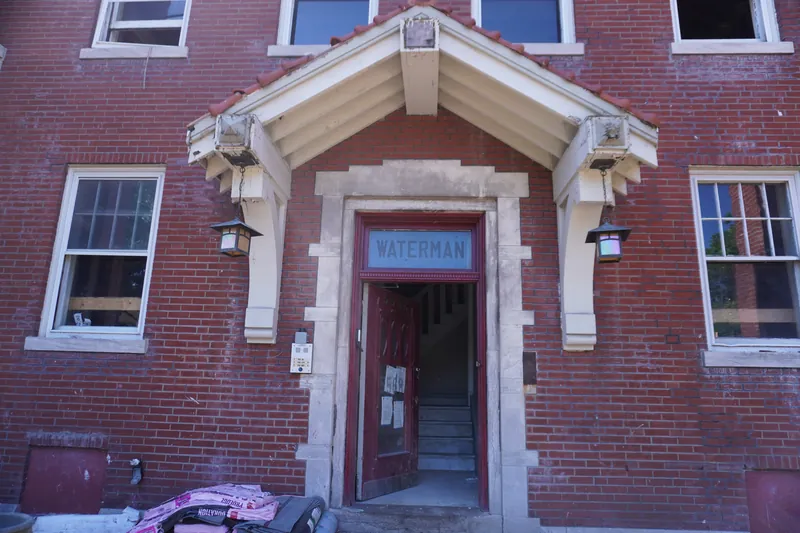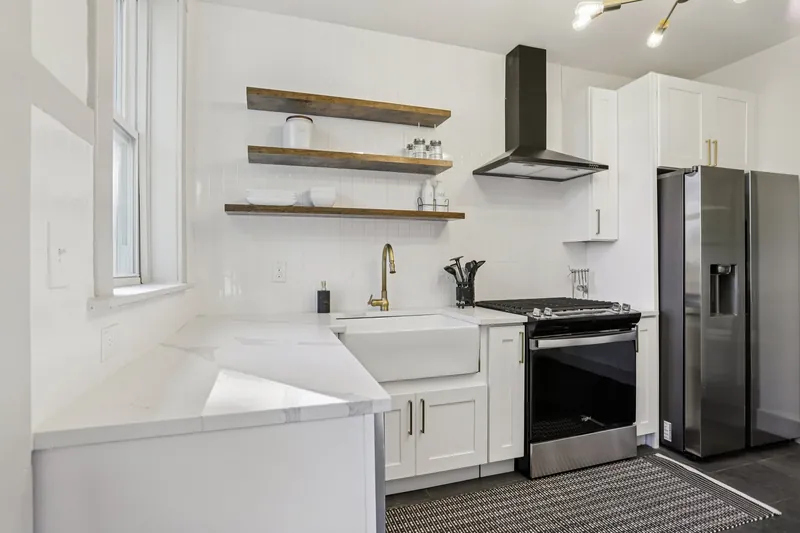
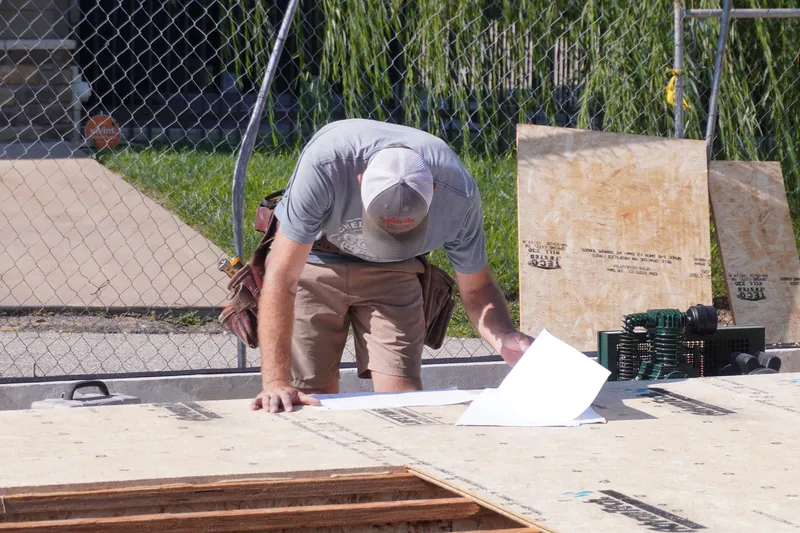
The first permit question in St. Louis is not what you are building. It is where the house sits. The City of St. Louis has been separate from St. Louis County since 1876, and the County is a patchwork of municipalities, many with their own building departments and others that contract with the County for the work. Two houses on opposite sides of a city limit can have different permit offices, different lists of work that needs a permit and different inspections when they sell.
This guide sorts out who issues permits on the Missouri side of the region, what work usually needs one and how to keep your project and its paperwork in order. Rules, fees and portals change, so read everything here as of October 2026 and confirm with your building department before work starts.
- Who issues your permit depends on where the house sits: the City of St. Louis, unincorporated St. Louis County, or a municipality that runs its own building department or contracts with the County.
- Moving walls, plumbing or wiring almost always needs a permit. Paint, flooring and like-for-like cabinets usually do not, but each jurisdiction publishes its own list.
- In the City of St. Louis, electrical, plumbing and mechanical permits go to City-licensed contractors, with a narrow homeowner exception for electrical work.
- In City historic districts, even painting, windows and tuckpointing can need approval.
- Many cities inspect homes at sale. Keep permits, approved drawings and final inspections with your house records.
Start with where your house sits
There are four basic arrangements in the City and St. Louis County.
City of St. Louis. The Building Division of the Department of Public Safety enforces the City building code, issues permits and inspects work. Its Permits Section (City Hall, 1200 Market St., Room 425, 314-622-3313) issues building, demolition, electrical, plumbing, mechanical and occupancy permits. In March 2026 the City announced its STL City Permits portal, where applicants can submit applications, upload plans, pay fees and track status online.
Unincorporated St. Louis County. Affton, Concord, Lemay, Mehlville, Oakville and Spanish Lake are census-designated places, not cities. St. Louis County's Department of Transportation and Public Works issues every permit there (41 South Central Ave., Clayton, 314-615-5184).
Municipalities with their own building departments. Kirkwood, Webster Groves, Brentwood, Clayton, University City, Ladue, Ballwin, Florissant and others issue their own building permits. Some still send trade work to the County: Maplewood, Richmond Heights and Des Peres rely on it for electrical, plumbing and mechanical permits, and Ladue for electrical.
Municipalities that contract with the County. Chesterfield, Crestwood, Fenton, Sunset Hills, Manchester, Wildwood and a long list of smaller cities contract with St. Louis County for the building code, so the County issues the permit and inspects. In the ones we checked, the city signs off first. Chesterfield requires a Municipal Zoning Approval. In Sunset Hills the zoning letter normally takes about two weeks, and the County will not accept plans without it. Crestwood requires its own Zoning Review Permit.
The County's municipal contract list (revised August 3, 2026) names more than 80 municipalities and spells out which codes the County enforces in each. It is the quickest way to see who does what in a given city.
St. Charles County and Jefferson County
Farther out, the pattern is simpler: the cities we checked run their own building departments, and each county handles its unincorporated land.
- St. Charles County. St. Charles, St. Peters, O'Fallon and Wentzville each issue their own permits. In unincorporated areas, the County Community Development Department's Building and Code Enforcement Division issues permits and contractor licenses.
- Jefferson County. Arnold and Festus issue their own permits. Festus requires a permit for work that replaces or installs framing, plumbing or electrical, and normally expects sealed architect or engineer drawings for new construction or a major renovation. Unincorporated areas are handled by the Jefferson County Code Enforcement Division.
Local quirks matter. The City of St. Charles requires its own licenses for electrical, plumbing and mechanical subcontractors. When damaged siding or shingles in Wentzville have no suitable match, the whole plane or elevation has to be replaced.
Who issues permits, city by city
The table covers the City, unincorporated St. Louis County and the municipalities we checked for this guide. The last column shows whether the city requires an inspection or occupancy permit when an owner-occupied home is sold. Several cities marked "No" still inspect rentals. This is as of October 2026, so confirm with the city before you rely on it.
| Where the house is | Who issues building permits | Inspection when sold? |
|---|---|---|
| City of St. Louis | City Building Division | Yes |
| Unincorporated St. Louis County (Affton, Mehlville, Oakville and others) | St. Louis County | Yes |
| Ballwin | City, including trade permits | Yes |
| Brentwood | City, including trade permits | Yes |
| Chesterfield | St. Louis County, after City zoning approval | No |
| Clayton | City; County does electrical inspections | Check with the city |
| Creve Coeur | City; County handles electrical and plumbing | No |
| Crestwood | St. Louis County, after a City zoning review permit | No |
| Des Peres | City; County issues electrical, plumbing and mechanical | No |
| Fenton | St. Louis County, after City zoning approval | No |
| Florissant | City, including trade permits | Yes |
| Kirkwood | City | Yes |
| Ladue | City; County issues electrical | Check with the city |
| Maplewood | City; County issues electrical, plumbing and mechanical | Yes |
| Richmond Heights | City; County handles electrical, plumbing and mechanical | Yes |
| Sunset Hills | St. Louis County, after City zoning approval | Yes |
| Town and Country | City for building and mechanical; County for electrical and plumbing | No |
| University City | City, including trade permits | Yes |
| Webster Groves | City, including trade permits | Yes |
| St. Charles (city) | City | Check with the city |
| St. Peters | City | No |
| O'Fallon | City | Check with the city |
| Wentzville | City | No |
| Unincorporated St. Charles County | St. Charles County | No |
| Arnold | City | Yes |
| Festus | City | Yes |
| Unincorporated Jefferson County | Jefferson County | Check with the county |
What usually needs a permit, and what usually does not
The City and the County each publish a list. They overlap but are not the same, and municipalities write their own.
City of St. Louis. A building permit is needed for additions; porches, decks and retaining walls; installing, removing or cutting structural beams, joists or bearing supports; foundation repair; converting a basement or attic to living space; removing or installing any partition in a habitable space; and a new roof that is not like material or replaces more than 25% of the sheathing. Plumbing, mechanical and electrical work need their own permits.
Work that usually needs no City building permit includes ordinary repairs to buildings of up to four units, tuckpointing, plaster patching, painting, floor refinishing, tile and carpet, cabinet installation, gutters, window and door replacement when the opening is not changed, like-for-like roofing with 25% or less of the sheathing replaced, and new aluminum, steel or vinyl siding with no change to openings. There are two exceptions: City historic districts and Landmarks (below), and FEMA flood areas, where a Floodway Development Permit is required even when no building permit is.
St. Louis County. The County requires a building permit to construct, enlarge, alter, repair, demolish or replace, or to convert unfinished space to living space, and it names kitchen remodels, bath remodels and basement finishing as examples. Its exempt list includes painting, tuckpointing, patching plaster and drywall, like-for-like flooring and siding replacement, even with a different siding type. Same-size cabinets and countertops in the same place are exempt, but resetting a sink or toilet or adding a dishwasher needs a plumbing permit. Replacement windows in existing openings are exempt only if they meet conditions on size, opening area, energy performance (a U-factor of 0.34 or less) and safety glass. Hanging new drywall, or adding insulation, furring and drywall to the inside of exterior walls, needs a permit.
Municipalities. Local lists can be broader or narrower. Maplewood requires a permit for any alteration, structural or not, and for general repairs involving two or more rooms. Ladue does not require one for a kitchen remodel limited to replacing appliances and cabinets. Florissant requires permits for water heater replacement and furnace or air conditioner installation, and Town and Country for HVAC and roof replacements.
Licensed trades: who can do electrical, plumbing and mechanical work
Missouri has no statewide general contractor license, so most contractor rules are local. The state does offer an optional statewide electrical contractor license, and cities and counties must accept it in place of their own.
In the City of St. Louis, trade permits follow the license:
- Electrical permits go to City-licensed electrical contractors. A homeowner can get one only after passing a short Building Division test, only for an owner-occupied single-family home and only to add to, repair or modify an existing system. Service changes, rehab and new construction need a licensed contractor.
- Plumbing permits go only to City-licensed plumbing contractors. New fixtures, soil stacks, vents, water supply lines and sewer lateral replacements all need one.
- Mechanical permits go only to City-licensed mechanical contractors, for furnaces, boilers, exhaust fans, hoods and ventilation.
General contractors working in the City need a Construction Industry Contractor Graduated Business License from the License Collector, proof of workers' compensation coverage and a Collector of Revenue clearance. They must also give the License Collector a list of subcontractors on each job.
St. Louis County requires a licensed electrical contractor, master plumber or HVAC servicer-installer contractor for those trades, or a qualifying homeowner, and offers homeowner electrical and plumbing tests ($25 per test as of October 2026). In unincorporated areas and full-contract cities, a residential job that includes trade work is issued as one Integrated Building Permit.
Some municipalities add their own registration. Kirkwood requires every contractor to hold a City Contractor's Business License backed by an insurance certificate naming the City. Ladue charges a $25 annual license fee and requires an insurance certificate. Clayton requires plumbing beyond ordinary repairs to be done by a master plumber licensed by both St. Louis County and Clayton. Our guide to choosing a contractor in Missouri covers licensing, insurance and lien rules in more depth.
Inspections: what to expect
A permit is the start of the oversight, not the end. The 2018 International Residential Code, which the City of St. Louis has adopted, sets out the usual sequence:
- Foundation, where there is foundation work.
- Rough-in of plumbing, mechanical, gas and electrical work, before anything is covered.
- Framing, after the rough-ins pass.
- Final, when the work is complete and before anyone occupies the space.
Work is not supposed to go past each stage until it is approved, and it is the permit holder's job to call for each inspection.
- In the City, the contractor prints the approved trade permit and schedules inspections from the STL City Permits dashboard. The building permit has to be displayed on site, and a dumpster or work that blocks a street or sidewalk needs a separate Blocking Right of Way Permit.
- In St. Louis County, inspections are scheduled by phone at 314-615-4677.
- Where a city and the County split the work, the order matters. In Des Peres, the City's framing inspection happens only after the County approves the rough electrical, plumbing and mechanical inspections.
Historic districts add a review step
In the City of St. Louis, a house in one of the 18 local historic districts, or one that is a City Landmark, plays by different rules. The Building Division's permit criteria say exterior painting, gutters and downspouts, windows, doors, tuckpointing, fences, awnings and similar exterior work need approval there, and that the Cultural Resources Office (CRO) usually requires a permit even where the building code does not. The Building Division refers those applications to the CRO automatically, and no permit is issued without CRO or Preservation Board approval. Applications that meet the district standards are usually approved within a few days.
Several county cities run their own design or preservation review for exterior work, including Kirkwood's Landmarks Commission, Webster Groves' Architectural Review Board and Maplewood's Design & Review Board. Our guide to renovating in a St. Louis historic district explains what gets reviewed and how to plan for it.
Before you start: three habits that save trouble
Check before you start. Call the building department for your address, describe the work and ask what permits, plans and approvals it needs. Ask whether a zoning approval comes first, as it does in Chesterfield, Crestwood, Fenton and Sunset Hills. Expect to submit drawings for bigger jobs. The County requires plans for new construction, additions and most alterations, and Webster Groves asks for two copies each of the application, the signed contract or scope of work and the construction drawings for a kitchen or bath permit.
Let your contractor pull the permits. In the City, plumbing and mechanical permits can only go to licensed contractors anyway, and whoever holds a permit is responsible for calling its inspections. If someone other than the owner applies for a City building permit, the owner signs a letter of authorization. Put who pulls permits, and who pays for them, in your contract. Modern Design + Build handles design through permit-ready drawings, with architectural drawings and engineering as part of our design and planning services.
Keep the paper trail. Save the permits, approved drawings, inspection approvals and final sign-off with your house records. They matter when you sell. Ballwin says an unpermitted basement finish must be permitted and approved before the house can be sold, and many cities inspect homes at sale. In the City of St. Louis, anyone can see an address's recent building permits through the City's Address & Property Search.
If you are planning a remodel and want help sorting out what it needs, book a free consultation.
- Building Division, City of St. Louis
- Permits Section, City of St. Louis Building Division
- New online building permit portal, Office of the Mayor, City of St. Louis (March 5, 2026)
- Building Permit, City of St. Louis Building Division
- Residential Building Permit Criteria, City of St. Louis Building Division
- Electrical Permit, City of St. Louis Building Division
- Plumbing Permit, City of St. Louis Building Division
- Mechanical Permit, City of St. Louis Building Division
- Building Codes, City of St. Louis Building Division
- Construction Contracting Business license, City of St. Louis License Collector
- Residential Occupancy Permits, City of St. Louis Building Division
- Address & Property Search, City of St. Louis
- History of the Physical Growth of the City of St. Louis, City of St. Louis
- Applications and Permit Review, City of St. Louis Cultural Resources Office
- City Historic Districts, City of St. Louis Cultural Resources Office
- Building Construction: When is a building permit required, St. Louis County
- Residential Building, St. Louis County Transportation and Public Works
- Requirements for a Permit, St. Louis County
- Municipal Contract Agreements, St. Louis County
- Code Directory, St. Louis County Transportation and Public Works
- Electrical Licensing, St. Louis County
- Occupancy Permit Applications, St. Louis County
- 2025 Gazetteer Files: Missouri places, U.S. Census Bureau
- Building Inspection and Plan Review, City of Webster Groves
- Kitchen and Bathroom Permits, City of Webster Groves
- Housing Inspections and Property Maintenance, City of Webster Groves
- Building Division, City of Kirkwood
- Building Remodeling and Repairs, City of Kirkwood
- Occupancy and Utilities Sign-Up, City of Kirkwood
- Building Division Information and Resources, City of Maplewood
- Housing Information and Tenant Rights, City of Maplewood
- Building and Occupancy Permits, City of Brentwood
- Occupancy, City of Brentwood
- Building and Zoning, City of Richmond Heights
- Building and Zoning Services, City of Richmond Heights
- Building Services, City of Clayton
- Planning and Development, University City
- Occupancy permit FAQs, University City
- Building Department FAQs, City of Ladue
- Building Department, City of Ladue
- Citizen Portal and contractor licensing, City of Ladue
- Building Permits, City of Sunset Hills
- Occupancy and Rental Registry, City of Sunset Hills
- Permits and Licenses, City of Crestwood
- Residential Construction, City of Des Peres
- Permit Requirements, Forms and Inspection, City of Des Peres
- Building Permits and Inspections, City of Town and Country
- Occupancy Permits, City of Town and Country
- Building Permits, City of Chesterfield
- Re-Occupancy Permits, City of Chesterfield
- Building Permits and Occupancy Inspection Information, City of Ballwin
- Building Division, City of Creve Coeur
- Residential Occupancy Inspection, City of Creve Coeur
- Building Permits, City of Florissant
- Occupancy Inspection, City of Florissant
- Community Development, City of Fenton
- Building Division, City of St. Charles
- Subcontractor Licensing, City of St. Charles
- Residential Real Estate Disclosure, City of St. Charles
- Building Safety, City of St. Peters
- Certificate of Occupancy Requirements, City of St. Peters
- Building and Permits, City of O'Fallon
- Building Division, City of Wentzville
- Occupancy Requirements, City of Wentzville
- Community Development, St. Charles County
- Occupancy Permit, St. Charles County
- Building and Code Compliance, City of Arnold
- Property Maintenance Inspections and Occupancy Permits, City of Arnold
- Building and Planning, City of Festus
- Residential Building Permit Requirements, City of Festus
- Certificate of Occupancy, City of Festus
- Code Enforcement, Jefferson County
- Licensing Boards, Missouri Division of Professional Registration
- Statewide Electrical Contractor FAQs, Missouri Division of Professional Registration
- Section 324.925, Missouri Revised Statutes
- 2018 International Residential Code, Chapter 1: Scope and Administration, International Code Council
- Landmarks Commission, City of Kirkwood
- Architectural Review Board, City of Webster Groves
- Design and Review Board and Historic Preservation Commission, City of Maplewood